Home EV Charger Cost UK 2026: Real Prices
What a home EV charger costs to install in the UK in 2026 — real prices by brand, what's in a standard install, and the hidden surcharges.
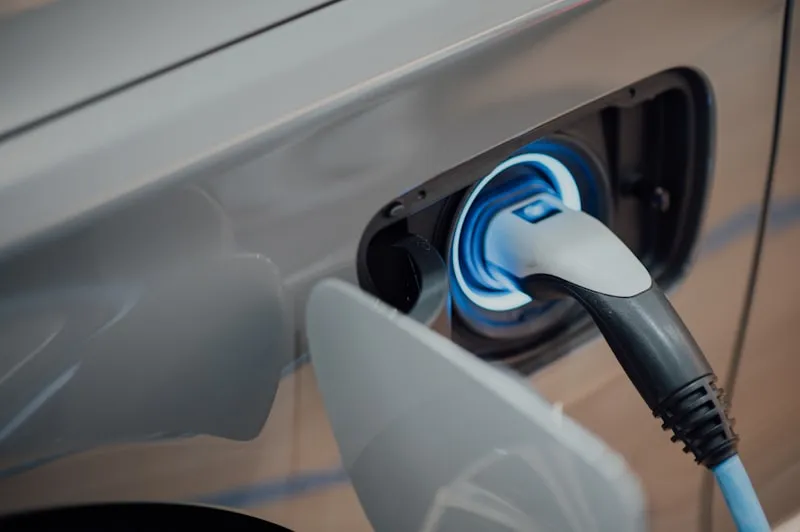
A 7 kW home EV charger in 2026 fits the "standard" UK home for £800–£1,500 all-in. Hardware accounts for roughly £400–£700 of that; labour and consumables the rest. Where quotes diverge — sometimes by £400+ on otherwise-identical jobs — is in the surcharges, the cable run, and whether the installer has factored in your existing fuse and supply.
The brand and price landscape
| Brand / model | Typical UK installed price | Notes |
|---|---|---|
| Pod Point Solo 3 | £800 – £1,100 | Biggest UK installer, tethered or untethered |
| Ohme Home Pro / ePod | £800 – £1,000 | Built-in tariff integration without separate energy supplier |
| Wallbox Pulsar Plus / Max | £800 – £1,100 | Small footprint, OZEV-compliant |
| Easee One | £900 – £1,100 | Up to three units off one 32 A supply; integrated 4G |
| myenergi zappi | £1,000 – £1,400 | Solar diversion / eco modes — popular with solar owners |
| Hypervolt Home 3 | £900 – £1,200 | Strong dynamic load balancing |
| Andersen A2 / A3 | £1,800 – £2,500 | Premium / design-led, wood finishes, hidden cable |
| Project EV / Sync EV | £600 – £850 | Budget end — fewer smart features |
What a 'standard install' actually includes
An OZEV-authorised installer's standard-install quote usually covers:
- The charger unit itself
- Up to 10–15 metres of cable run from your consumer unit to the charger location
- Drilling through one external wall up to ~500 mm thick
- Type A RCD/RCBO or equivalent fault protection
- Integrated O-PEN protection (or earth rod where required)
- DNO notification (G98 or G99 — see below)
- Commissioning and a short demo of the app
- Building Regs Part P notification
- Insurance-Backed Guarantee (where the installer offers one)
What's not standard — and the surcharges that follow
- Long cable runs (over 10–15 m) — typically £25–£40/m additional
- Trenching across a driveway or garden — £200–£500+ depending on length and surface
- Drilling through thicker walls (e.g. solid stone, brick + cavity + brick over 500 mm) — £50–£200 surcharge
- Routing through a loft or roof void — £150–£400 additional labour
- Three-phase supply install — usually £200–£500 above single-phase
- Consumer unit upgrade or replacement — £400–£700 if your existing board can't accommodate a new circuit
- Earth rod installation where required (charger without built-in O-PEN, or specific soil conditions) — £100–£200
- Surveys for difficult installs — sometimes charged separately at £75–£150
The biggest cost trap: your existing main fuse
Many UK homes have a 60 A or 80 A main fuse — labelled on the meter cover, but the actual fuse inside can be different. A 60 A main fuse with a heat pump, an electric shower or an electric hob may not have headroom for a 7 kW (32 A) charger. The cutout fuse can only be replaced by the DNO (the company that owns the supply, not your energy supplier). DNO upgrades are usually free if justified, but can take 4–12 weeks. Your installer cannot touch the cutout fuse.
Two workarounds: a charger with dynamic load balancing (a CT clamp on the meter tails throttles charger output when the rest of the house draws power), or split the charger across two units sharing a single supply (some brands like Easee support this).
Tethered vs untethered
Tethered chargers have a cable permanently attached. Grab and plug — fastest day-to-day, the cable is whatever the manufacturer fitted (usually 5 m, Type 2). Downsides: you're stuck with that cable length and connector, the cable is exposed to weather, and replacing a damaged cable is a job for the installer.
Untethered chargers are just a Type 2 socket on the wall. You bring your own cable from the car. More flexible (works with any Type 2 cable, future-proof for car changes), tidier on the wall, but slightly more faff each session. Untethered units are typically £50–£100 cheaper than tethered.
For most UK households, tethered is the convenience choice; untethered is the flexibility choice. Both are equally valid.
Smart features and the Smart Charge Point Regulations
Since 30 June 2022 (and with cyber-security provisions from 30 December 2022), every home or workplace charger sold in Great Britain must be a smart charger. The regulations require:
- Smart functionality: network connectivity and remote control
- Default off-peak charging windows: out of the box, the unit blocks charging during peak periods (preset 08:00–11:00 and 16:00–22:00 on weekdays) — the user can override but must do so deliberately
- Randomised delay of up to 10 minutes at the start of an off-peak charge session, to prevent thousands of chargers switching on simultaneously and spiking the grid
- Tamper protection and security logging
- Cyber-security compliance: encrypted comms, secure boot, ability to take security updates
- Continues to function as a dumb charger if connectivity is lost
All UK-sold chargers in 2026 should comply by default — but cheap parallel-import units from abroad may not. Stick to OZEV-authorised brands (the same list of brands that qualify for grants where applicable).
O-PEN protection — and why some units need an earth rod
On a PME (TN-C-S) supply — which is the most common UK arrangement — outdoor EV chargers cannot rely on the supply earth alone for safety. The installer must provide one of:
- A supplementary earth electrode (earth rod) with measured resistance ≤ 15 Ω
- An external O-PEN (Open-PEN, broken-neutral) detection device that disconnects on a fault
- A charger with built-in O-PEN protection that satisfies the standard
Most modern UK chargers — Ohme, Wallbox Pulsar, Hypervolt, Easee, myenergi zappi, Pod Point Solo 3 — include built-in O-PEN protection, removing the need for an earth rod in the vast majority of installs. This makes them cheaper and quicker to install than older or budget units that require a separate earth rod. Earth rods can be impractical in clay soils, in paved gardens, or on small driveways — a charger with built-in protection sidesteps the problem entirely.
Three-phase supply
A three-phase supply lets you fit a 22 kW charger (where the car supports it) instead of the standard 7 kW single-phase unit. Most domestic EVs charge at a maximum 7–11 kW on AC, so the practical benefit of 22 kW is limited (and on Smart Charge Point regs the off-peak-window randomised delay applies regardless of power). For most UK homes with a three-phase supply, a 7 kW single-phase unit is still the right answer; reserve 22 kW for fleets or for charging cars that genuinely support faster AC charging (some Renault, some Tesla, some BMW i4/iX, etc.).
Cost comparisons in context
- Public rapid charging: typically 60–80 p/kWh — about £40 for a 60% top-up
- Home charger on Intelligent Octopus Go (off-peak): ~7 p/kWh — about £4–£5 for the same top-up
- Payback on the install vs public charging: a typical 10,000 mile/year EV uses ~2,500 kWh. Savings of ~50p/kWh = £1,250/year. Charger install pays back in roughly 12 months.
Sources & further reading
- Electric Vehicles (Smart Charge Points) Regulations 2021 — legislation.gov.uk
- OZEV / OPSS Guide to EVSCP Regulations 2021 — OZEV
Editorial standards
How this guide was put together
Independent
Editorially independent UK guides — no sponsored content
Primary sources
Every guide cites gov.uk, Ofgem, MCS and manufacturer data
Current
Updated as schemes, prices and regulations change
Get a quote that's actually itemised
Good installers quote a clear standard-install price plus any surcharges upfront. Get free quotes.
Get Free Quotes