Heat Pump Cost UK 2026: Real Prices & Grants
How much does a heat pump cost in the UK in 2026? Real installation prices by type and property size, with the £7,500 BUS grant and 0% VAT applied.
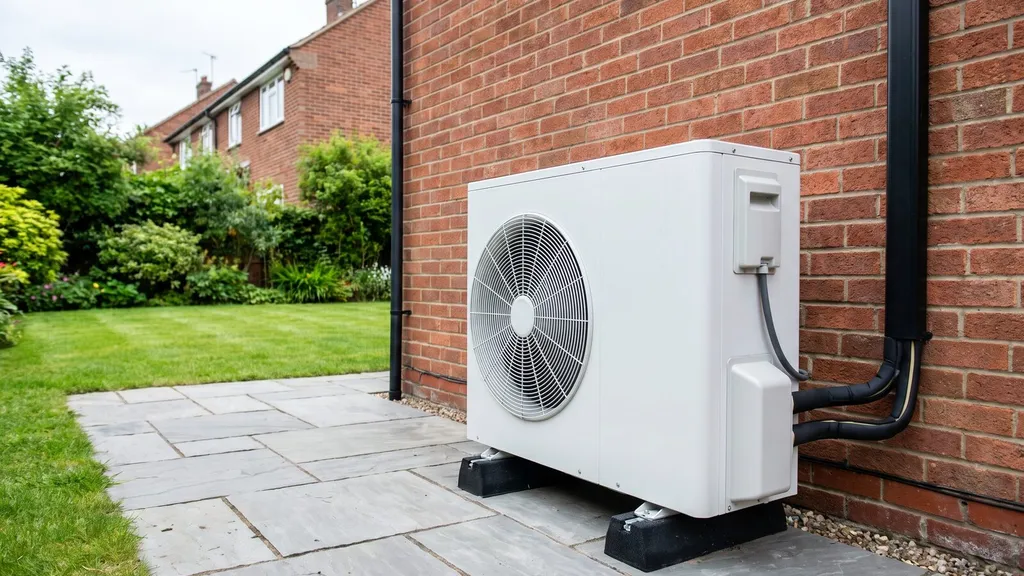
A heat pump in the UK in 2026 costs £11,000–£16,000 fully installed for a typical air source unit. The £7,500 Boiler Upgrade Scheme grant brings that to roughly £3,500–£8,500 out of pocket for most homeowners. Ground source heat pumps cost more (£16,000–£40,000); air-to-air systems less (£5,000–£10,000). VAT is zero-rated on heat pump installations until 31 March 2027.
The reference point: DESNZ statistics for the latest published quarter (Oct–Dec 2025) put the average BUS-claimed installation at £13,431 for an 8.4 kW air source heat pump, including the unit, hot water cylinder, pipework changes, electrical work, commissioning and MCS sign-off. After the £7,500 grant, the average homeowner paid around £5,930 out of pocket. From July 2026, oil and LPG households can claim an enhanced £9,000 grant.
Here's what determines what you'll actually pay, by heat pump type and property size, with the grant and 0% VAT applied.
Costs by heat pump type
| Heat Pump Type | Typical Installed Cost | After £7,500 BUS Grant | Best For |
|---|---|---|---|
| Air source (ASHP) | £11,000 – £16,000 | £3,500 – £8,500 | Most UK homes |
| Ground source — horizontal | £16,000 – £25,000 | £8,500 – £17,500 | Properties with garden space |
| Ground source — vertical boreholes | £23,000 – £40,000 | £15,500 – £32,500 | Larger homes, no garden |
| Air-to-air (split system) | £5,000 – £10,000 | £2,500 – £7,500 | Heating + cooling, no DHW |
These are fully installed prices including the unit, labour, hot water cylinder (where applicable), commissioning and MCS certification. VAT is zero-rated on heat pump installations until 31 March 2027, so these figures already reflect that.
0% VAT runs out 31 March 2027
VAT on heat pumps and other energy-saving materials reverts from 0% to 5% on 1 April 2027 unless extended. On a £14,000 installation that's roughly £700 of extra cost — modest, but worth weighing if you're planning the work for late 2027 or beyond.
Costs by property size
The size of your home (and how leaky it is) drives the output capacity you need, which is the biggest single factor in price. A well-insulated 3-bed semi might need a 5–7 kW pump; a solid-wall 4-bed detached can easily need 12–14 kW with significant radiator upgrades.
| Property Size | Bedrooms | Typical ASHP Cost | After £7,500 Grant |
|---|---|---|---|
| Flat or small terrace | 1–2 | £9,000 – £11,500 | £1,500 – £4,000 |
| Mid-terrace / small semi | 2–3 | £11,000 – £13,500 | £3,500 – £6,000 |
| Typical semi or small detached | 3 | £12,000 – £15,000 | £4,500 – £7,500 |
| Detached | 4+ | £14,000 – £18,000 | £6,500 – £10,500 |
| Large or hard-to-heat detached | 5+ | £17,000 – £25,000+ | £9,500 – £17,500+ |
What's actually included in a heat pump quote
An MCS-compliant heat pump quote should cover:
- The heat pump unit and outdoor base / wall brackets
- A heat-pump-spec hot water cylinder (typically 180–300 litres)
- Pipework and connections from the heat pump to the heating circuit
- Necessary radiator upgrades to suit lower flow temperatures
- Electrical supply, isolation, and DNO notification
- Controls — weather compensation and any zoning
- Commissioning, MCS certificate and building control sign-off
- Handover and operating instructions
What's often not included and can add to the cost: underfloor heating, additional insulation work, asbestos removal in older properties, consumer-unit upgrades if your existing board can't accommodate the new circuit, or a separate planning application if your install doesn't fall under permitted development.
The £7,500 BUS grant
Check eligibilityBoiler Upgrade Scheme
Up to £7,500
Deducted directly from your installer's quote. £9,000 rate now live for off-gas oil and LPG homes (from 21 July 2026).
The Boiler Upgrade Scheme (BUS) gives £7,500 off air-to-water, ground source and water source heat pumps, £2,500 off air-to-air systems (added 28 April 2026), and £5,000 off biomass boilers in eligible off-grid rural properties. Your MCS-certified installer handles the application — the grant is deducted at the point of sale, not claimed back later.
Hybrid systems (a heat pump paired with a new gas/oil/LPG boiler) are not eligible for BUS. The grant is for full replacement of the fossil-fuel system, not supplementation.
Running costs: the honest comparison
A well-installed air source heat pump in a reasonably insulated UK home typically delivers a Seasonal Performance Factor (SPF) of around 3.0–3.8 in real-world conditions — meaning for every kWh of electricity it draws, it delivers 3.0–3.8 kWh of heat. DESNZ's Electrification of Heat demonstration project found a roughly 1.0-point gap between declared SCOP on datasheets and in-situ SPF, which is the most important number nobody on a sales call will tell you.
For a typical 3-bed semi needing around 10,000 kWh of heat per year, at the April–June 2026 Ofgem price cap (24.67 p/kWh electricity):
- Heat pump at SPF 3.5, standard tariff: ~£705/year
- Heat pump at SPF 3.5, heat pump tariff (Octopus Cosy, EDF Heat Pump Tracker, British Gas Heat Power): ~£450–£560/year with load shifting
- Modern A-rated gas boiler (90% efficient, 5.74 p/kWh): ~£640/year
- Oil boiler (85% efficient, ~9.7 p/kWh thermal): ~£1,140/year
- LPG boiler: ~£1,200–£1,400/year
- Direct electric heating: ~£2,470/year
On a standard tariff, a properly installed heat pump costs roughly the same to run as a modern gas boiler. On a dedicated heat pump tariff with smart scheduling, it's typically £150–£300/year cheaper than gas. Against oil and LPG, the running-cost case is decisive — and that's before factoring in the £9,000 BUS uplift for oil/LPG homes from July 2026.
SPF matters more than brand
A well-commissioned £11,000 install will outperform a poorly-commissioned £15,000 install every time. The single biggest determinant of real-world running cost is how well the installer sizes radiators, sets the weather compensation curve, and matches flow temperature to the building's heat loss. Pay for design quality, not marketing.
Is a heat pump worth it?
For most UK homes replacing a gas boiler, a heat pump is a long-term investment that starts to pay off once you factor in the grant, the 0% VAT, the longer lifespan (20–25 years for the unit, 50+ years for ground loops), and rising gas costs over the next decade. If you're replacing an oil or LPG boiler, the economics are stronger today and become decisive once the £9,000 BUS uplift goes live in July 2026.
Where it makes less financial sense right now: if you have a relatively new, efficient gas boiler, excellent insulation, and no immediate need to replace. In that case, getting insulation and controls right first (loft, cavities, smart thermostat, weather compensation on the boiler) is the higher-value move, and you can reassess in 3–5 years when your boiler is closer to end-of-life.
Sources & further reading
- Boiler Upgrade Scheme statistics — quarterly release — DESNZ
- BUS Property Owner Guidance V5 (April 2026) — Ofgem
- VAT on energy-saving materials (VAT Notice 708/6) — HMRC
- Electrification of Heat Demonstration: Heat Pump Performance Data Analysis — Energy Systems Catapult / DESNZ
- Air source heat pumps: costs, savings and benefits — Energy Saving Trust
Editorial standards
How this guide was put together
Independent
Editorially independent UK guides — no sponsored content
Primary sources
Every guide cites gov.uk, Ofgem, MCS and manufacturer data
Current
Updated as schemes, prices and regulations change
Get an accurate quote for your home
Speak to MCS-certified installers near you. Quotes are free and include the BUS grant deducted.
Get Free Quotes