Heat Pump Grants UK 2026: BUS Explained
The Boiler Upgrade Scheme gives £7,500 off a heat pump in England and Wales — now up to £9,000 for off-gas oil and LPG homes (live 21 July 2026).
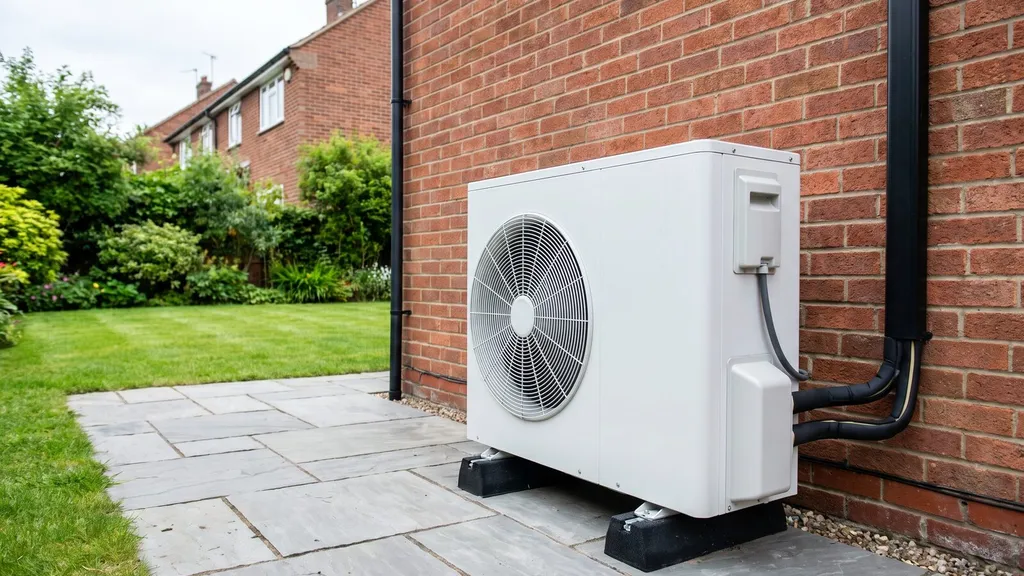
The main UK heat pump grant in 2026 is the Boiler Upgrade Scheme (BUS), which pays £7,500 toward a new air source, ground source or water source heat pump in England and Wales. Since 21 July 2026, off-gas homes replacing an oil or LPG boiler can claim an enhanced £9,000 rate (air-to-water and ground-source only). Air-to-air systems get a separate £2,500 grant (added 28 April 2026). The scheme runs until 2030.
The grant is deducted directly from your installer's quote — you don't pay full price and claim it back. Your MCS-certified installer applies for the voucher via Ofgem, the install goes ahead, and the £7,500 (or £9,000, or £2,500) comes off your bill at the point of sale. Scotland operates a separate scheme (Home Energy Scotland Grant and Loan, up to £15,000 grant + interest-free loan combined).
The mandatory EPC requirement was removed on 28 April 2026, broadening eligibility significantly. Here's exactly how much you can get, who qualifies, and how the application process works.
How much you can get
| Heat Pump Type | Grant Amount | Notes |
|---|---|---|
| Air source (air-to-water) | £7,500 | Standard ASHP — the most common UK install |
| Ground source | £7,500 | Requires land for ground loops or boreholes |
| Water source | £7,500 | Must be near a suitable body of water |
| Air-to-air (split-type) | £2,500 | Residential only — added 28 April 2026 |
| Biomass boiler | £5,000 | Rural, off-gas-grid properties only |
| Heat battery | £2,500 | Announced — awaiting product/installation standards |
The grant is deducted directly from your installation quote — you don't pay full price and claim it back. Your MCS-certified installer applies for a voucher through Ofgem before the work starts, the voucher gets approved, the install goes ahead, and the installer redeems the voucher after commissioning. The £7,500 (or £2,500, or £5,000) comes off your bill at the point of sale.
£9,000 for oil and LPG homes — live from 21 July 2026
The £9,000 uplift is now in the official gov.uk grant-values notice, effective 21 July 2026 to 31 March 2027. It's a £1,500 increase, but tightly targeted: you get it only if your home is off the mains gas grid, you're replacing an oil or LPG system, and you're fitting an air-to-water or ground-source heat pump. Air-to-air and biomass don't qualify for the uplift, and homes on mains gas or electric stay on £7,500.
Applications on or after 21 July 2026 get the higher rate automatically. If that's you, read our honest take on swapping an oil or LPG boiler for a heat pump — including whether it actually saves you money.
Who's eligible
You can apply for the BUS if all of the following are true:
- You own the property in England or Wales — homeowners, private landlords, small businesses, and genuine self-builders all qualify.
- You're replacing a fossil-fuel or direct-electric system — gas, oil, LPG, coal, or electric heating (storage heaters, panel heaters, electric boilers).
- The installer is MCS-certified — both the firm and the product must be on the MCS register.
- You haven't already had public funding for the same heat pump installation (you can't double-dip with ECO4 or the Warm Homes: Local Grant for the same measure).
EPC requirement removed
Until 28 April 2026, you needed a valid EPC with no outstanding loft or cavity insulation recommendations. That requirement has been removed under the V5 guidance. You can now apply without an EPC — though insulation is still worth tackling on its own merits, because better insulation means a smaller, cheaper, and more efficient heat pump.
Who's not eligible
- New-build properties — except genuine self-builds where the property is built primarily using the labour and resources of the first owner.
- Social housing — including shared ownership, council and housing association tenants, and properties let at below-market rates. These have separate routes (Warm Homes: Social Housing Fund and equivalents).
- Hybrid systems — a heat pump paired with a new gas, oil or LPG boiler does not qualify. BUS is for full replacement of the fossil-fuel system, not supplementation.
- Northern Ireland and Scotland — Scotland has its own scheme (Home Energy Scotland) and Northern Ireland has separate arrangements.
How to apply, step by step
- Get quotes from MCS-certified installers — they'll do a proper heat-loss survey of your property, design the system to MCS standards, and quote with the grant deducted.
- Choose your installer — make sure the quote clearly shows the BUS grant deducted, an itemised radiator/cylinder schedule, and the design flow temperature.
- The installer applies for a voucher via Ofgem's online portal, with your consent.
- Ofgem emails you to confirm consent and check eligibility.
- Voucher is approved — typically within 2–4 weeks.
- Installation goes ahead — usually 2–5 days on site.
- Installer redeems the voucher within 120 days of the MCS commissioning date.
You don't deal with Ofgem directly — your installer handles all the paperwork. The grant comes off your bill, so you only pay the balance.
0% VAT on top of the grant
On top of the BUS, heat pump installations are zero-rated for VAT until 31 March 2027. On a £14,000 installation that's a saving of roughly £700 compared to the 5% reduced rate the scheme will revert to. Standalone batteries, insulation, solar PV and several other measures also qualify. After 31 March 2027 the rate reverts to 5% unless the Treasury extends it.
The total picture for a typical home
DESNZ statistics from the most recent published quarter (October–December 2025) show the average BUS-claimed installation cost was £13,431 for an 8.4 kW system. With the £7,500 grant, that's around £5,931 out of pocket — and lower again if 0% VAT was already applied. For an oil/LPG home from July 2026, the same install would come down to around £4,431.
Scotland
Scotland has the Home Energy Scotland Grant and Loan, administered by Energy Saving Trust on behalf of the Scottish Government. It pays a grant of up to £7,500 plus an optional interest-free loan of up to £7,500 — so up to £15,000 combined. There's a £1,500 rural and island uplift, taking the grant to £9,000 in qualifying locations (or up to £18,000 with the loan added).
Eligibility is broadly similar — you must own the property, it must be your primary residence, and the heat pump must provide 100% of heat and hot water. Hybrid systems are not eligible.
Wales
Wales offers the Nest Warm Homes Programme for eligible low-income households, which can include heat pump funding alongside insulation, solar and other measures. Wales-resident homeowners are also eligible for the BUS in the same way as English homeowners.
Common questions
Can I combine BUS with other schemes?
You can't combine BUS with ECO4 or the Warm Homes: Local Grant for the same measure. But you can use BUS for the heat pump and separately claim insulation funding (e.g. ECO4 or WHLG) if you qualify. They're for different things.
Does the property still need to be insulated?
Not as a grant condition any more — but yes in practical terms. A heat pump in a leaky, uninsulated home will be larger, more expensive, and have a poorer real-world SPF. If you're making a single investment, fabric first is still the right order: loft, cavities, draughts, then heat pump.
What if my property doesn't have an EPC?
From 28 April 2026, you no longer need one to apply for BUS. You may still want to get one (around £60–£120, valid 10 years) — it gives you a baseline for any insulation work and is useful when selling.
How long does the voucher take?
Typically 2–4 weeks from installer application to Ofgem approval. Vouchers are valid for 6 months once issued, so there's no rush to start work immediately.
What does the average homeowner actually pay?
Based on Ofgem's BUS claim data, the typical out-of-pocket cost in late 2025 was around £5,500–£7,000 after the grant for a standard semi or detached property. Smaller homes pay less; larger or more complex retrofits pay more. From July 2026, oil/LPG homes should expect around £4,000–£5,500 net.
Sources & further reading
- Boiler Upgrade Scheme — Apply — gov.uk
- BUS Property Owner Guidance V5 (April 2026) — Ofgem
- Notice of approved grant categories and values for the BUS — DESNZ
- Decisive action to break the influence of gas on electricity prices — DESNZ press release, 21 April 2026
- Warm Homes Plan — gov.uk
- Home Energy Scotland Grant and Loan — Home Energy Scotland
- Nest Warm Homes Programme — Welsh Government
Editorial standards
How this guide was put together
Independent
Editorially independent UK guides — no sponsored content
Primary sources
Every guide cites gov.uk, Ofgem, MCS and manufacturer data
Current
Updated as schemes, prices and regulations change
Want a grant-deducted quote?
Get free quotes from MCS-certified installers who'll apply for the BUS voucher on your behalf.
Get Free Quotes