Heat Pump Running Costs UK 2026
What does a heat pump cost to run per year in the UK? Real 2026 numbers at the Ofgem price cap, compared with gas, oil, LPG and direct electric.
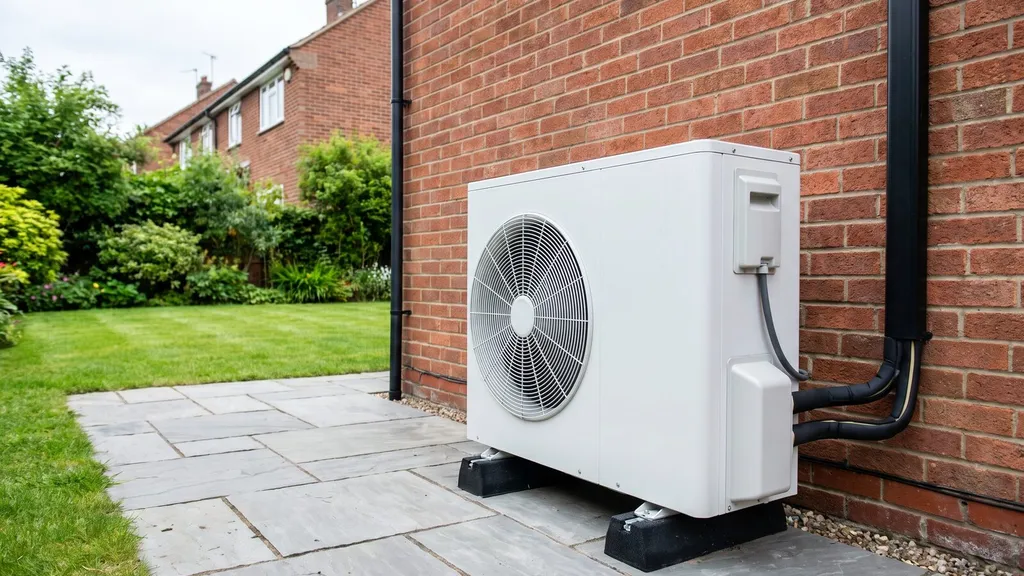
Heat pump running costs are simpler than they sound. They depend on three numbers: how much heat your home needs (kWh/year), your system's real-world efficiency (SPF), and the price you pay for electricity (p/kWh). Everything else is detail. This guide pins down each of those numbers using current Ofgem and DESNZ data, then compares against gas, oil, LPG and direct electric on like terms.
The reference numbers (May 2026)
The April–June 2026 Ofgem price cap (GB average, direct debit) sets the reference electricity price at 24.67 p/kWh with a standing charge of 57.21 p/day. Gas sits at 5.74 p/kWh. Oil and LPG aren't capped — kerosene was running at around 9.7 p/kWh thermal in spring 2026 (DESNZ Quarterly Energy Prices), with bulk LPG typically 10–11 p/kWh.
The honest comparison: 10,000 kWh of heat per year
A typical UK 3-bed semi needs around 10,000 kWh of useful heat per year (space heating plus domestic hot water). A poorly insulated 4-bed detached can be 16,000–20,000 kWh; a well-insulated modern 3-bed semi can be 7,000–9,000 kWh. Here's what 10,000 kWh costs by fuel at May 2026 prices:
| Fuel / system | Typical efficiency | Unit price (May 2026) | Annual cost (10,000 kWh heat) |
|---|---|---|---|
| Mains gas (modern A-rated boiler) | 90% | 5.74 p/kWh | £638 |
| Heat pump, SPF 3.5, default tariff | SPF 3.5 | 24.67 p/kWh | £705 |
| Heat pump, SPF 3.5, heat pump tariff | SPF 3.5 | blended ~16 p/kWh | £457 |
| Oil (kerosene) | 85% | ~9.7 p/kWh thermal | £1,141 |
| LPG (bulk) | 85% | ~10–11 p/kWh | £1,176–£1,294 |
| Direct electric (panel/storage) | 100% | 24.67 p/kWh | £2,467 |
A few things the table doesn't show
Standing charges add another £209/year on a dual-fuel direct debit contract. With a heat pump you only pay the electricity standing charge (~£209/yr); a gas household pays both (~£416/yr total). On standing charges alone, a heat pump household saves ~£200/yr.
The above SPF 3.5 figure is the average for a well-installed system. Poorly commissioned units routinely deliver SPF 2.5–2.8 and cost meaningfully more to run. Commissioning is the variable that matters most.
The role of heat pump tariffs
Heat pump-specific electricity tariffs reward households for shifting heating load into cheaper off-peak windows. With a properly oversized cylinder and weather-compensated controls, you can pre-heat the cylinder during off-peak, run the heating harder during off-peak, and let the building's thermal mass coast through peak — bringing the blended electricity cost down significantly.
| Tariff | Off-peak rate (May 2026) | Off-peak window | Notes |
|---|---|---|---|
| Octopus Cosy | ~14.53 p/kWh | 04:00–07:00, 13:00–16:00, 22:00–24:00 (8h) | Peak 16:00–19:00 at ~51 p/kWh |
| EDF Heat Pump Tracker | Cap rate −10 p/kWh | 04:00–07:00, 13:00–16:00 (6h) | Tracks Ofgem cap quarterly |
| British Gas Heat Power | Half-price | 00:00–07:00, 13:00–16:00 (70h/wk) | Longest off-peak window of the bunch |
| OVO Heat Pump Plus | — | Closed to new customers Feb 2026 | Existing customers reverted to standard rate |
OVO Heat Pump Plus closed February 2026
OVO's flat 15 p/kWh effective tariff closed to new customers on 1 February 2026 and the rebate stopped for existing customers. OVO has said a replacement is in development but there's no fixed launch date as of May 2026. If you see this tariff mentioned in older guides, it's no longer available.
What you actually pay in real terms
For a typical 3-bed semi (10,000 kWh heat demand) with a well-installed heat pump at SPF 3.5:
- On the Ofgem default tariff: roughly £700–£780/year all-in (energy + share of standing charge)
- On Octopus Cosy with disciplined load shifting: roughly £500–£600/year
- On EDF Heat Pump Tracker: roughly £550–£650/year
- On British Gas Heat Power: roughly £500–£600/year
The £150–£300/year difference between the default tariff and a heat-pump tariff is real money over a 20-year unit lifespan — £3,000–£6,000 of compound savings. Worth setting up properly.
How to actually pay the lower figure
A heat pump tariff alone doesn't deliver the savings. You need the system to be configured to take advantage of the cheap rates. The basics:
- Smart meter — SMETS2, half-hourly settlement capable. Most heat pump tariffs require this.
- Cylinder over-sizing — a 250L or 300L cylinder gives you the thermal store to run DHW during off-peak only. Skimping on cylinder size is the most common reason households can't shift load.
- Weather compensation — flow temperature varies with outdoor temperature, set by a curve. Without this, your pump runs at the design flow temperature all the time and you pay for it.
- Time-of-use schedules on the controller — increase setpoint slightly during off-peak, decrease (or hold) during peak. Most modern controllers (Daikin Onecta, Vaillant Sensonet, Mitsubishi MELCloud) support this; not all installers configure it.
- No setbacks at night — keep the building warm and let off-peak hours top it up. Boiler-era habits of "off at night, blast in the morning" are the worst possible strategy for a heat pump.
Where a heat pump struggles to beat gas
The honest answer: on the default Ofgem cap with a poorly commissioned install in a leaky house, a heat pump can cost a bit more to run than a modern gas boiler. The reasons it wins elsewhere — heat pump tariff, SPF 3.5+, decent insulation, longer unit life — only stack up when the install is done well.
If you're in a leaky solid-wall property with a working A-rated boiler, no plans to fix insulation, no interest in tariff management, and you replace your boiler every 10 years anyway — the £/year case for a heat pump today is borderline. The £/year case for a heat pump in 2030, when the electricity-to-gas price ratio rebalances (a stated direction of the Warm Homes Plan), is far stronger.
What about hot water alone?
Domestic hot water is typically 20–25% of a household's heating demand. A heat pump at SPF 2.5–3.0 for DHW (a typical figure — DHW efficiency is lower than space heating because cylinder temperatures are higher) still beats direct-electric immersion comfortably. Versus gas it's roughly cost-neutral on default tariff and cheaper on a heat pump tariff.
Bottom line
With a well-installed heat pump (SPF 3.5+), a heat pump tariff, and a system configured to shift load, expect to pay £500–£700/year to heat a typical 3-bed semi in 2026. Versus oil or LPG, you'll save £400–£800/year and avoid the price volatility of unregulated fuel markets. Versus mains gas, you'll save £50–£150/year now on a heat pump tariff, with the gap widening as the gas:electricity ratio shifts.
On oil or LPG specifically, the sums — and the new £9,000 grant — change the picture again: see oil boiler vs heat pump for the full off-grid comparison.
Sources & further reading
- Energy price cap unit rates and standing charges — Ofgem
- Quarterly Energy Prices (March 2026) — DESNZ
- Electrification of Heat Demonstration: Final Report — Energy Systems Catapult
- Cosy Octopus tariff — Octopus Energy
- Heat Pump Tracker — EDF Energy
- Heat Power tariff — British Gas
Editorial standards
How this guide was put together
Independent
Editorially independent UK guides — no sponsored content
Primary sources
Every guide cites gov.uk, Ofgem, MCS and manufacturer data
Current
Updated as schemes, prices and regulations change
Want a tailored estimate?
MCS-certified installers will calculate your home's heat demand and quote a system to suit. Free, no obligation.
Get Free Quotes