Best EV Tariffs UK 2026: Off-Peak Rates
The smart EV tariffs that pay back a home charger inside 12 months — Intelligent Octopus Go, EDF GoElectric, BG EV Power and more, compared.
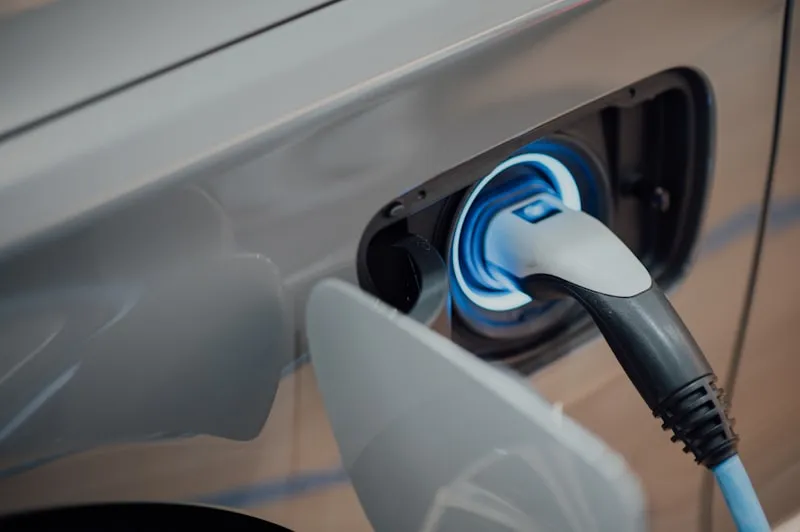
Home EV tariffs are the single biggest reason home charging pays back so fast versus public rapid charging. The going off-peak rate in 2026 is ~7 p/kWh — about a tenth of the typical rapid-charge cost. The tariffs aren't identical though; the off-peak window length, the smart dispatch capability, and the daytime / peak rates all matter.
The 2026 EV tariff landscape
| Tariff | Off-peak rate (May 2026) | Off-peak window | Notes |
|---|---|---|---|
| Intelligent Octopus Go | ~7 p/kWh | 23:30–05:30 (6h) | Smart dispatch — extends cheap rate to other slots if car/charger compatible |
| Octopus Go | ~7–9 p/kWh | 00:30–05:30 (5h) | Fixed window, no smart dispatch |
| EDF GoElectric (35 / 98) | ~6.99 p/kWh | 23:00–06:00 (7h) | Longest overnight window of the mainstream tariffs |
| British Gas EV Power | ~9 p/kWh | Off-peak window | Single off-peak rate; check current rate for your region |
| OVO Charge Anytime | ~14 p/kWh | Algorithmic | Subscription / pay-as-you-go smart-charging add-on, not a full tariff |
| Scottish Power EV Tariff | ~8–10 p/kWh | Off-peak | Available to SP import customers |
| E.ON Next EV | ~8–9 p/kWh | Off-peak | Multi-rate EV-specific tariff |
All rates are regional and change quarterly
These are GB-average reference rates for May 2026. Your actual rate depends on your DNO region (Northern Scotland is different from London is different from Wales) and changes every quarter when the Ofgem cap updates. Always check the supplier's quoted rate for your postcode before signing up.
Intelligent Octopus Go: the market reference
Intelligent Octopus Go has become the de facto reference tariff for UK home EV charging. The structure:
- Off-peak rate: ~7 p/kWh between 23:30–05:30 (6 hours)
- Smart dispatch: if your car or charger is compatible (Octopus lists supported devices), Octopus's algorithm can dispatch additional cheap-rate charging slots outside the fixed window when wholesale prices drop. So you might get 3–4 extra hours of off-peak rate during the day on a windy or sunny weekend.
- Day rate: standard rate (~26 p/kWh), close to the Ofgem cap
- Standing charge: ~57 p/day, broadly the same as a standard variable tariff
To use IOG you need a SMETS2 smart meter and either a compatible EV or a compatible charger. Octopus maintains a list of supported devices. Pod Point, Ohme, Wallbox, Easee, myenergi, and several others integrate directly.
EDF GoElectric: longer fixed window
EDF GoElectric (often labelled GoElectric 35 / 98 depending on the rate variant) offers a fixed 7-hour overnight window from 23:00 to 06:00 at around 6.99 p/kWh. No smart dispatch — but the longer fixed window suits households that can't use the smart features (older cars without compatible chargers, multiple-EV households).
Standing charge and peak rate broadly comparable to the Ofgem cap. EDF GoElectric is a good set-and-forget choice for non-smart cars or non-Octopus customers.
OVO Charge Anytime: smart layer, not a full tariff
OVO Charge Anytime is structurally different from the others. It sits on top of your normal OVO import tariff as a smart-charging add-on. The OVO algorithm finds the cheapest periods to charge your EV (via integration with the charger or car) and credits the difference back to your bill at ~14 p/kWh. You don't get a flat off-peak rate; you get optimised charging at an effective price.
For households that aren't going to fiddle with their charger schedule, Charge Anytime is convenient. The effective ~14 p/kWh is roughly double the explicit off-peak rates of Intelligent Octopus Go or EDF GoElectric, so for engaged users it's not the best choice.
Standing charges and peak rates: don't ignore them
EV tariffs usually have standing charges and peak rates similar to or slightly higher than a standard variable tariff. So the household's total annual electricity bill needs modelling, not just the off-peak rate.
Rough rule of thumb: for a household using 3,500 kWh/year total (of which ~2,500 kWh is EV charging), the saving from moving to a good EV tariff vs standard variable is typically £450–£600/year. For a household using 6,000+ kWh/year (heat pump + EV), it's £600–£900/year, sometimes more.
The 'random delay' caveat
Smart Charge Point Regulations 2021 require all UK-sold chargers to apply a randomised delay of up to 10 minutes at the start of an off-peak window — to prevent grid spikes when thousands of chargers all switch on at 23:30. Your charger may not actually start drawing power until 23:30–23:40. This is normal and built into the unit's firmware; it doesn't affect your overall charging time materially.
Multiple cars on the same tariff
If you have two EVs, each car charging from the same single off-peak window can be tight. Solutions:
- Stagger charging — set Car A to charge first (e.g. 23:30–02:30), Car B second (02:30–05:30)
- Pick a tariff with a longer off-peak window (EDF GoElectric at 7 hours, or BG EV Power)
- Don't try to top both to 100% every night; charge to 80% and rotate which gets the full window
- Use Intelligent Octopus Go's smart dispatch — it can extend the cheap rate into daytime slots when wholesale is low
What about V2G and V2H?
Vehicle-to-Grid (V2G) and Vehicle-to-Home (V2H) — using the car as a battery to power the house or export to the grid — are still niche in the UK in 2026. A handful of tariffs and chargers support it (Octopus has trials, Wallbox Quasar 2 supports bidirectional charging), but you need specific car and charger hardware, plus G99 DNO approval for any installation capable of grid export. For most households this is one to revisit in 2027–28 when the ecosystem matures.
Sources & further reading
- Intelligent Octopus Go — Octopus Energy
- GoElectric overnight tariff — EDF Energy
- Energy price cap unit rates — Ofgem
Editorial standards
How this guide was put together
Independent
Editorially independent UK guides — no sponsored content
Primary sources
Every guide cites gov.uk, Ofgem, MCS and manufacturer data
Current
Updated as schemes, prices and regulations change
Want a charger that works with your tariff?
Some chargers integrate with specific tariffs better than others. Speak to an OZEV-authorised installer.
Get Free Quotes