What to Look For in a Home EV Charger
OZEV authorisation, dynamic load balancing, solar diversion, app quality — what actually matters when choosing a home EV charger in 2026.
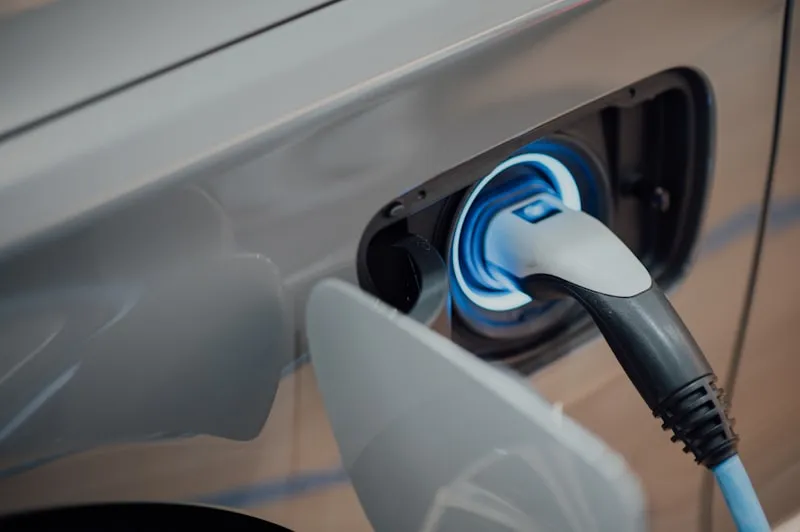
Most home EV chargers do the basic job adequately. Where they differ is in the smart features that actually save money, the integration with your tariff, and the small build-quality details that decide whether the unit still works in five years. Here's what to look at when comparing.
1. OZEV authorisation
Whether or not you qualify for the grant, OZEV-authorised units are tested against the Smart Charge Point Regulations 2021 and meet the UK's smart-charging, cyber-security and default-off-peak-window rules. Buying outside this list (parallel imports from Europe or Asia) means you might end up with a unit that doesn't legally comply, won't integrate with UK tariffs, and has no UK warranty support. Stick to OZEV-authorised brands.
2. Tethered vs untethered
Tethered (fixed cable): faster day-to-day, the cable is whatever the manufacturer provided (usually 5 m Type 2). You're stuck with that cable length and connector type.
Untethered (Type 2 socket): you bring your own cable. More flexible across cars, tidier wall, typically £50–£100 cheaper. Slightly more faff each charge.
For a household with one EV that's unlikely to change, tethered is the convenience win. For households with multiple cars, future car changes likely, or where the cable run from the wall to the parking spot varies, untethered is the better long-term choice.
3. Dynamic load balancing (CT clamp)
A CT clamp on your incoming meter tails lets the charger monitor your whole-house draw in real time. When the rest of the house pulls heavy load (oven on, kettle on, EV plugged in, heat pump running), the charger automatically reduces its output to keep total demand below the main fuse rating.
This is the single most important feature on a constrained supply. Without it, a 60 A or 80 A main fuse can leave you waiting weeks for a DNO upgrade. With it, the install goes ahead without supply changes. Hypervolt, Wallbox, Ohme, myenergi zappi and most modern units support this — confirm it's included in your quote.
4. Solar diversion / PV integration
If you have (or are getting) solar, a charger that can divert surplus solar generation directly into the car is genuinely useful. The flagship for this is the myenergi zappi, which has the most refined solar diversion logic on the market. Other brands (Wallbox Quasar, Hypervolt, Ohme) offer varying degrees of solar-aware scheduling.
Solar-only EV charging effectively replaces export at 12 p/kWh with self-consumption at 24.67 p/kWh — doubling the value of every kWh diverted. Over a year, for a solar household, that can be £100–£250 of additional benefit.
5. Tariff integration
The two big questions:
- Does the unit support Intelligent Octopus Go's smart dispatch? (Octopus maintains a list — check the unit is on it.)
- Is there an open API or scheduling capability that supports other tariffs?
Ohme is unusual in that it has built-in tariff integration without requiring a matching energy supplier — you can use Ohme on any tariff because the unit's own algorithm handles the scheduling. Most other brands rely on the supplier-side smart dispatch (works well with Octopus, less well with others).
6. App quality and data access
The app matters more than you'd expect. You'll use it daily — to check charge level, set schedules, check usage history. Quality varies wildly:
- Excellent: Pod Point, Ohme, myenergi (zappi)
- Good: Wallbox, Hypervolt, Tesla Wall Connector
- Functional: Easee, EO Mini
- Patchy: budget brands with white-label apps
A surprising number of disputes between EV owners and chargers come down to "I can't make the schedule do what I want" — a poor app is a daily annoyance. Look at app store reviews (filtering for recent versions) before committing.
7. Warranty
Industry standard is 3 years. Some brands offer 5 years (Ohme, Hypervolt Home 3), and a small handful offer longer. More important than the headline length is what's covered:
- Cable (a common failure point on tethered units)
- App and connectivity (firmware updates and cloud service availability)
- Installation workmanship (separate from the unit warranty — typically 1–2 years from the installer)
8. Future-proofing
Two emerging features to consider:
- V2G / V2H readiness — vehicle-to-grid and vehicle-to-home. Almost no unit currently sold for £1,000–£1,500 supports bidirectional charging. Wallbox Quasar 2 (~£4,000+) does. Don't pay a premium today for V2G unless you have a specific reason.
- Three-phase support — overkill for most domestic UK installs; relevant for fleet or businesses.
9. Aesthetic and physical footprint
Wall-mounted, externally visible. If aesthetics matter (Conservation Area, listed building, front-of-house install), the Andersen range and Tesla Wall Connector are the prettiest options — also the most expensive. Most mainstream units (Pod Point Solo 3, Wallbox Pulsar, Ohme ePod) are reasonably compact (~30 × 20 × 10 cm) and in either black or white. Take a photo of the planned location and check the size against the unit's dimensions.
The shortlist for a typical 2026 UK install
For a single-EV household on Intelligent Octopus Go, with off-street parking, no solar:
- Pod Point Solo 3 — biggest UK installer network, solid app, OZEV-authorised, no fuss
- Ohme Home Pro — built-in tariff intelligence, works with any supplier
- Wallbox Pulsar Plus — small footprint, good dynamic load balancing
If you have solar:
- myenergi zappi — best-in-class solar diversion logic
- Hypervolt Home 3 — strong PV integration, 5-year warranty
If you want a premium aesthetic:
- Andersen A2 / A3 — wood-finish front panel, hidden cable, lifetime cable replacement
Sources & further reading
- Office for Zero Emission Vehicles — gov.uk
- Electric Vehicles (Smart Charge Points) Regulations 2021 — legislation.gov.uk
Editorial standards
How this guide was put together
Independent
Editorially independent UK guides — no sponsored content
Primary sources
Every guide cites gov.uk, Ofgem, MCS and manufacturer data
Current
Updated as schemes, prices and regulations change
Compare quotes with these criteria in mind
A good installer will ask about your tariff plan, supply rating and roof solar before quoting a specific unit.
Get Free Quotes