What to Look For in a Heat Pump (UK 2026)
Forget ranked top-10s. What actually matters when choosing a heat pump in 2026 — SCOP at flow temp, refrigerant, noise, warranty — and how the brands compare.
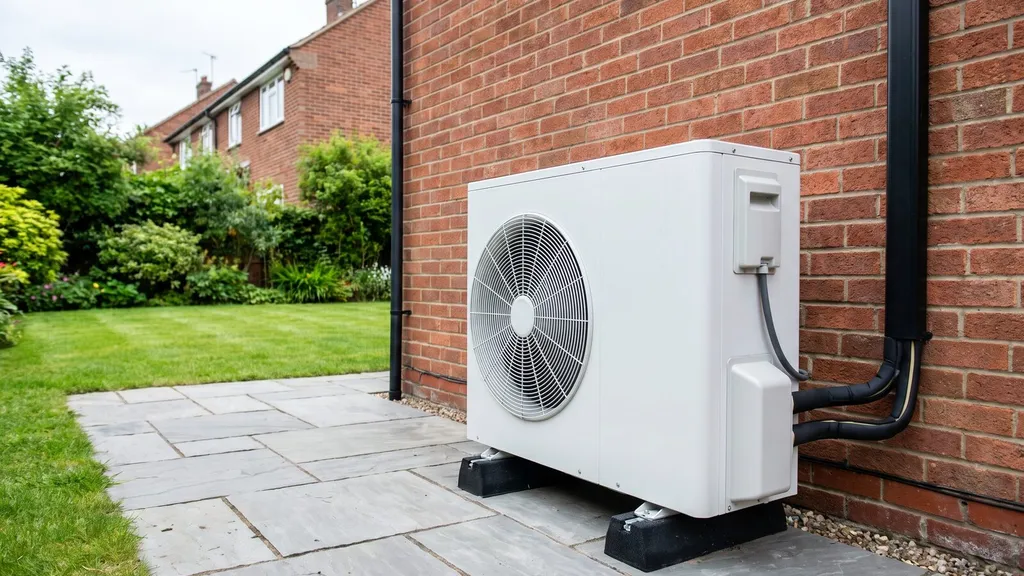
The best heat pump for a UK home in 2026 is the one with the highest SCOP at your design flow temperature (not the brochure number at 35°C), running R290 refrigerant where possible, with sound power under 48 dB(A) for permitted-development compliance, and a strong UK service network. For most UK retrofits in 2026, this means one of: Vaillant aroTHERM plus, Mitsubishi Ecodan R290, Daikin Altherma 3, Viessmann Vitocal 150-A/250-A, Grant Aerona 290, Samsung EHS Mono R290, or Worcester Bosch Compress 5800i AW.
But — and this matters more than the brand choice — who installs it and how well they commission it is the single biggest predictor of whether you'll be happy with the system in five years. A well-installed mid-range unit will outperform a poorly-installed premium one every time.
Here are the nine criteria that actually matter when comparing heat pumps in 2026, with a comment on how each major UK brand stacks up against them.
1. SCOP at the flow temperature your design needs
The first column on every manufacturer datasheet is SCOP at 35°C flow. It's the most flattering number a marketing department can publish. What matters is the SCOP at the flow temperature your installer has actually designed for — usually 45°C, 50°C or 55°C in a UK retrofit. Ask for that figure specifically. Most manufacturers publish at 35°C and 55°C; the 45°C and 50°C numbers usually require asking the technical team.
Above 55°C flow, R32 units drop off quickly; R290 units retain meaningful efficiency up to 70–75°C. If you're being quoted for a 55°C+ system on an R32 unit, the running cost case is weak — push for either an R290 unit or radiator upgrades that let you design at 45–50°C.
2. Refrigerant — R290 over R32 where possible
R290 (propane) is the future-standard. It runs higher flow temperatures with better efficiency, has 200× lower GWP than R32, and is naturally occurring. Almost every major UK brand has an R290 range in 2026:
- Vaillant aroTHERM plus — R290, 3.5–12 kW, the first major UK R290 launch (2021)
- Mitsubishi Ecodan R290 — UK-manufactured, 5–12 kW, replacing R32 from 2025
- Viessmann Vitocal 150-A / 250-A — R290, 70°C flow, COP up to 5.32 at A7/W35
- Samsung EHS Mono R290 Gen 7 — R290, 5–16 kW, Quiet Mode
- Worcester Bosch Compress 5800i AW — R290, Quiet Mark, 41.5 dB(A) sound power
- Grant Aerona 290 — R290, 4–15.5 kW, A+++ at 35°C
- Octopus Cosy — R290, vertically integrated with the tariff
- Aira — R290, subscription model
- NIBE F2120 — R32 still (premium, with up to 65°C flow); R290 range expected
- Daikin Altherma 3 R / H HT — predominantly R32 in the volume range; later to market with R290
3. Modulation range — can it run gently when demand is low?
A 12 kW heat pump that can only modulate down to 6 kW will short-cycle on mild days when your home only needs 3 kW of heat. Short-cycling kills SPF, increases wear, and shortens compressor life. Look for units with wide turndown ratios — most modern inverter-driven units modulate down to 25–30% of rated output, the best go below 20%. Daikin, Vaillant, Mitsubishi and Viessmann all do this well; budget brands sometimes don't.
4. Noise — sound power, not marketing claims
Manufacturers quote whichever noise figure is most flattering. Sound power (Lw) is the property of the unit; sound pressure (Lp) is what you measure at a distance. These are different numbers. A unit marketed as "33 dB(A) quiet mode" might be sound pressure at 3 m distance — useless for siting calculations.
What to ask for: sound power (Lw) at full and reduced speed, both A-weighted. Then your installer can run the MCS 020(a) calculation to determine whether you need planning permission. From 28 May 2026 the standard is 37 dB LAeq at the neighbour assessment position — significantly tighter than the previous 42 dB threshold.
5. Warranty and parts availability
Compressor warranty is the headline figure. UK norms:
- Standard tier: 5 years (most brands)
- Premium tier: 7–10 years (Daikin, Viessmann, Worcester Bosch, with annual service)
- Annual service required on virtually every brand to maintain warranty
More important than the length is the practical reality: how many engineers in your area can service that brand? Vaillant, Mitsubishi, Daikin, Worcester Bosch and Grant have the deepest UK engineer networks. NIBE and Viessmann are excellent units but the engineer network is thinner. Niche brands and direct-to-consumer subscription models (Aira, Octopus Cosy) tie you to a single provider for the life of the system — fine if that company stays in business, a real risk if not.
6. Hot water cylinder included or separate?
Some quotes "include" a cylinder that's actually a boiler-spec unit with a 1.2 m² coil — not enough surface area for a heat pump to deliver useful flow at the lower flow temperature. A proper heat-pump cylinder has a 2.5–3.5 m² coil. Check the cylinder spec; don't accept a quote without it. Reliable heat-pump cylinder brands: Telford, McDonald, OSO, Joule, Range, Mixergy (smart), and most major heat pump manufacturers' own cylinders.
7. MCS-listed product and installer
Non-negotiable for the BUS grant. Check both the unit and the installer at mcscertified.com. If either isn't listed, the grant won't pay out. MCS-listed doesn't guarantee a good install (the standards are minimum thresholds, not gold standards), but no MCS = no grant.
8. Control system and tariff integration
The controller is what makes the difference between a heat pump that just heats and a heat pump that heats cheaply. Look for:
- True weather compensation (not just "outdoor reset")
- Time-of-use scheduling — can it raise setpoint during off-peak hours automatically?
- App with usage data — you need to be able to see what's happening
- OpenTherm or eBus compatibility — useful for third-party controllers (Tado, Homely)
- Octopus Intelligent / Cosy compatibility if you plan to use that tariff (full bidirectional control where supported)
9. The "what to walk away from" checklist
- Quote without a room-by-room heat-loss calculation
- Design flow temperature of 55°C or higher with no radiator upgrades
- Cylinder included without a stated coil rating
- "Includes BUS grant" without showing the deduction line in writing
- "We'll use whichever unit's in stock" — model not specified at quote
- Pressure to sign quickly, or "today only" pricing
- No mention of MCS 020(a) sound assessment
- Cheapest quote by a wide margin (£2,500+) than the others — usually means significant scope has been left out
- Installer can't or won't show you their MCS certificate number on request
What about specific brand recommendations?
Honest answer: for a typical 2026 UK retrofit, any of Vaillant aroTHERM plus, Mitsubishi Ecodan R290, Daikin Altherma 3, Viessmann Vitocal 150/250-A, Grant Aerona 290, Samsung EHS Mono R290 or Worcester Bosch Compress 5800i would deliver a good result if installed and commissioned properly. The brand isn't where the action is — the installer's heat-loss calculation, design flow temperature, and commissioning quality are.
Get three quotes. Compare the designs as carefully as you compare the prices. The right unit for your home is the one your best installer specifies, not the one a top-10 list told you to ask for.
Sources & further reading
- MCS Product Directory — MCS
- MIS 3005-D Heat Pump Design Standard V2.0 — MCS
- MCS 020(a) Sound Assessment — MCS — mandatory 28 May 2026
- Electrification of Heat Demonstration: Final Report — Energy Systems Catapult
- Heat pump user survey (Nesta) — Nesta
Editorial standards
How this guide was put together
Independent
Editorially independent UK guides — no sponsored content
Primary sources
Every guide cites gov.uk, Ofgem, MCS and manufacturer data
Current
Updated as schemes, prices and regulations change
Compare quotes from MCS installers
The brand matters; the install matters more. Get quotes from a few good installers and compare the design, not just the price.
Get Free Quotes