Solar Panel Cost UK 2026: Real Prices
How much do solar panels cost in the UK in 2026? Installed prices by system size, the MCS-reported average, and what your quote should include.
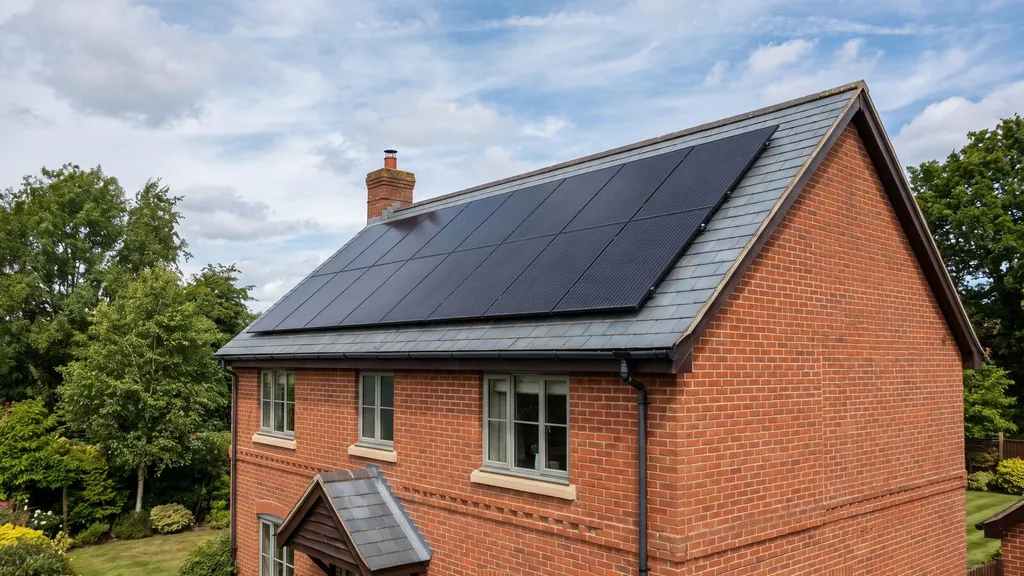
Solar PV costs have dropped significantly in real terms over the last five years, even as panel quality has improved. The MCS reported a UK average installed cost of around £7,596 in April 2026 across the typical mid-size residential systems. Here's what you can expect to pay in 2026 by system size, and what should and shouldn't be on your quote.
Costs by system size
| System Size | Panels (approx) | Typical Installed Cost | Suits |
|---|---|---|---|
| 3 kW | 7 × 440 W | £4,000 – £6,500 | Small 1–2 bed, modest daytime use |
| 4 kW | 9–10 × 440 W | £6,500 – £8,500 | Typical 3-bed family home |
| 6 kW | 13–14 × 440 W | £7,000 – £9,500 | 3–4 bed, higher use or EV |
| 8 kW | 18–19 × 440 W | £9,000 – £11,500 | 4 bed + EV / heat pump |
| 10 kW+ | 22+ × 440 W | £10,500 – £13,500 | Large detached, high consumption |
These prices include the panels, mounting kit, inverter, scaffolding, DC and AC isolators, cable runs to the consumer unit, generation meter, commissioning, MCS certificate, building regs sign-off and DNO notification. 0% VAT is already applied.
What drives the variation
- Scaffolding requirements — terraced properties and listed buildings cost more; some properties need scaffolding around the whole house even for a single-pitch install.
- Roof complexity — multiple pitches, slate or stone roofs, dormers and chimneys all add labour.
- Inverter choice — basic string inverter ~£600; hybrid inverter (solar + battery) ~£1,000; SolarEdge with optimisers ~£1,500–£1,800; Enphase microinverters ~£140 per panel.
- Panel tier — budget TOPCon ~£100/panel; premium back-contact (Maxeon, LONGi HPBC, REC Alpha) ~£200+/panel for higher efficiency.
- Cable runs — long runs from roof to consumer unit add labour and cable cost.
- DNO process — G98 (≤3.68 kW per phase) is fit-and-notify; G99 (above 3.68 kW or with battery export) requires pre-approval, adds 2–8 weeks.
What should be in your quote
- Panels — make, model, wattage, count, with datasheets
- Inverter — make, model, AC rating, warranty (10–15 yrs typical, 25 yrs for microinverters)
- Mounting system — branded kit, warranty against leak (15–25 yrs)
- Generation estimate — kWh/year, using PVGIS or MCS estimation method, with assumptions stated (orientation, pitch, shading factor)
- Scaffolding cost itemised
- DC/AC isolators, generation meter, surge protection if specified
- Cable run path described
- DNO application route — G98 or G99
- MCS certificate provision
- RECC or HIES membership confirmation (Insurance-Backed Guarantee)
- VAT shown as 0% (until 31 March 2027)
What's usually not included
- Battery storage — quoted separately, typically £4,000–£11,000 depending on size and brand
- Consumer unit upgrade if your existing board can't accept a new circuit (£400–£700)
- Re-roofing or roof repairs — solar installers don't fix roofs
- Bird mesh — £200–£500 for a typical roof if pigeons are an issue
- Hot water diverter (Eddi, Solar iBoost) — £350–£500 fitted; useful if you have an immersion cylinder
- EV charger or smart-load device — separate quotes
The 0% VAT cliff
0% VAT runs out 31 March 2027
Solar PV and battery storage are zero-rated for VAT until 31 March 2027 (the relief was extended to standalone batteries on 1 February 2024). On 1 April 2027 the rate reverts to 5% reduced VAT, not 20% — a £400 difference on an £8,000 install. The cliff is real but not catastrophic; don't let an installer pressure you into rushing if your install would otherwise be poorly planned.
Cost per kWp
Per-kWp pricing is a useful benchmark. Typical 2026 UK ranges:
- Small systems (3 kW): £1,300–£2,150/kWp — scaffolding and fixed costs hit harder per kWp
- Mid systems (4–6 kW): £1,200–£1,750/kWp — the sweet spot for most UK roofs
- Large systems (8 kW+): £1,050–£1,500/kWp — economies of scale kick in
- Premium back-contact panels: add £200–£350/kWp regardless of system size
What about a 'free solar' or 'rent your roof' offer?
Rent-a-roof schemes — where a company installs panels on your roof in exchange for the Feed-in-Tariff payments — were popular pre-2019. With the FiT closed, almost no genuine rent-a-roof model works financially any more. If you see an offer that sounds too good, look very carefully at the contract length (often 20+ years), early-termination fees, and what happens if you want to sell the house. Most are a poor deal compared to buying outright.
Battery costs alongside solar
Common 2026 retrofit add-on prices:
- 5 kWh battery: +£2,000–£3,000
- 10 kWh battery: +£4,000–£6,000
- 13.5 kWh Powerwall 3: +£8,000–£11,000
See our battery storage guide for sizing, brand comparison and whether a battery makes sense for your usage pattern.
Sources & further reading
- MCS Data Dashboard — MCS
- VAT on energy-saving materials (VAT Notice 708/6) — HMRC
- VENSAV3061: VAT on battery storage — HMRC
- Solar Energy UK — Trade body
Editorial standards
How this guide was put together
Independent
Editorially independent UK guides — no sponsored content
Primary sources
Every guide cites gov.uk, Ofgem, MCS and manufacturer data
Current
Updated as schemes, prices and regulations change
Get a tailored quote
Roof-specific pricing from MCS-certified solar installers near you. Free, no obligation.
Get Free Quotes