Heat Pump Noise UK & the 2026 Rules
How loud is an air source heat pump? Typical noise levels, the 42 dB neighbour limit, the stricter MCS 020(a) rules from May 2026, and noisy-install fixes.
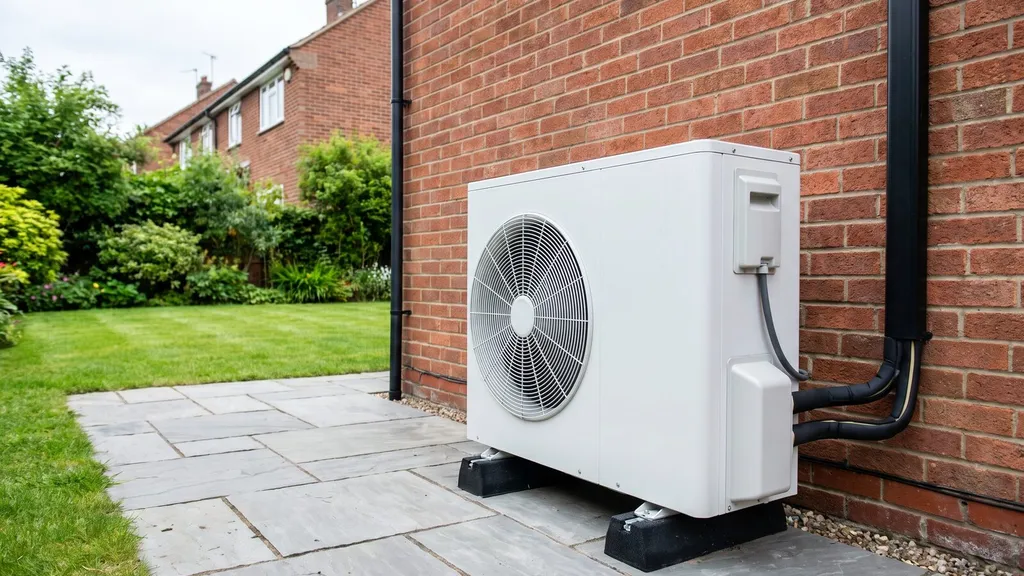
Modern air source heat pumps are quiet — typically 41–54 dB(A) sound power, about the level of a fridge or a quiet conversation. Indoors, a well-sited unit is effectively inaudible; outside at 3 metres you can hold a normal conversation next to one. The persistent "heat pumps are noisy" reputation comes from older units and a handful of badly-sited installs, not the current generation.
For planning, the number that matters is the noise at your neighbour's window: to qualify as permitted development (no planning application) the limit is 42 dB(A) at 1 metre from their nearest habitable-room window. And there's an important 2026 change — from 28 May 2026, the stricter MCS 020(a) assessment became the only accepted route, meaning some tight installs that would have passed before now need planning permission.
Here's how loud they really are, how the rules work, why "sound power" and "sound pressure" aren't the same thing, what to do if an install is noisy, and how to site one so it never becomes a problem.
How loud is a heat pump, really?
| Sound source | Approx level |
|---|---|
| Quiet rural night / library | ~30 dB |
| Modern heat pump (sound power, full speed) | 41–54 dB(A) |
| Fridge / quiet office | ~40–45 dB |
| Heat pump at 3 m (sound pressure) | ~35–45 dB(A) |
| Normal conversation at 1 m | ~60 dB |
| Washing machine in use | ~70 dB |
The decibel scale is logarithmic, so these gaps are bigger than they look — a 50 dB unit is perceived as roughly twice as loud as a 40 dB one. The good news is that 2026's quietest units (many now carry Quiet Mark accreditation) sit at the bottom of the range, and noise falls off quickly with distance: every doubling of distance from the unit drops the level by about 6 dB.
Sound power vs sound pressure: the number to watch
This is the single most misunderstood part of heat pump noise, and manufacturers exploit it:
- Sound power (Lw) — the total acoustic energy the unit produces. It's a fixed property of the machine and it's the figure used in the MCS planning calculation. This is the honest number.
- Sound pressure (Lp) — what you'd actually measure at a given distance. It's lower than sound power and gets lower the further away you stand.
Marketing loves to quote "as low as 35 dB" — usually a sound-pressure figure measured several metres away, or in a special quiet mode. For siting and planning, ask for the sound power (Lw) on the datasheet, at both full and reduced speed. That's the number your installer feeds into the MCS 020(a) assessment.
The UK noise rules — and the May 2026 change
Most domestic heat pump installs in England qualify as permitted development — no planning application needed — provided the noise at the neighbour's window stays within the limit. That assessment is done under MCS standard MCS 020.
MCS 020(a) — stricter from 28 May 2026
From 28 May 2026, MCS 020(a) became the only accepted noise-assessment route for permitted-development heat pump installs in England. The previous method allowed up to 42 dB(A) at 1 m from the neighbour's habitable-room window; the new MCS 020(a) calculation is more rigorous — it works from the unit's sound power and applies a tighter 37 dB LAeq input at neighbour assessment positions.
The practical effect: installers must choose quieter units or site them more carefully, and a minority of installs — typically tight terraces, side returns, and close-boundary properties — that would have passed under the old rules now need a full planning application. A good installer runs this calculation before you sign and tells you which route you're on.
What affects how much noise reaches your neighbour
- The unit's sound power — pick a quiet one (check the datasheet Lw, not the marketing figure)
- Distance — every doubling of distance from the neighbour's window cuts ~6 dB. Siting matters more than almost anything.
- Reflective surfaces — a unit tucked into a corner or recess bounces sound and is perceived as louder; an open position radiates away from boundaries
- Acoustic barriers — a solid fence or wall between the unit and the boundary helps
- Mounting — anti-vibration mounts or a ground pad stop structure-borne vibration; a unit bolted to a hard wall can transmit a hum into both homes
Defrost noise is normal
In cold, damp conditions (below about 5°C), ice forms on the outdoor coil and the unit briefly reverses every 30–60 minutes to melt it. During defrost the fan often stops, and you may hear a change in tone, a brief whoosh, or a slightly louder spell for a few minutes. This is automatic and by design — not a fault, and not something to worry about.
Why can I hear it inside the house?
A properly designed install should be near-silent indoors. If it isn't, the usual culprits are structure-borne vibration, not airborne noise:
- Outdoor unit bolted directly to an external wall (should be on anti-vibration mounts or a separate ground pad)
- Unit sited directly outside a bedroom or living-room window
- Pipework or brackets rigidly fixed to the structure, carrying vibration inside
These are all fixable — anti-vibration mounts, repositioning, or isolating the pipework. If your install is audible indoors, raise it with your installer; a noisy install often signals a rushed job, and it's reasonable to expect them to put it right.
What to do about a noisy heat pump (yours or a neighbour's)
If it's your unit, your installer should remedy a noisy install — anti-vibration mounts, repositioning, or a quieter fan-speed/weather-compensation setting often solves it.
If it's a neighbour's:
- Talk to them first — many causes (hard-wall mounting, missing anti-vibration mounts, a fan fault) are cheap fixes they may not realise are needed
- Contact environmental health at your local council if that fails — they can investigate under statutory nuisance rules and require remediation if the noise is a nuisance
- Check the planning status — if it was claimed as permitted development but breaches the MCS 020(a) limit, it may not have been permitted, and the planning team can assess it
How to make sure noise is never a problem
- Choose a unit with a low sound power (Lw) — ideally Quiet Mark accredited
- Site it as far from neighbours' (and your own) windows as practical, away from corners and recesses
- Insist on anti-vibration mounts or a proper ground pad — never a bare wall bolt
- Make sure your installer runs the MCS 020(a) assessment as part of the design and shows you the result
- If you're in a tight terrace or close-boundary property, ask about planning before committing — better to know up front than after install
Get the siting and the unit choice right and a modern heat pump simply isn't a noise problem. The complaints almost always trace back to a rushed install, not the technology. For the wider picture on choosing a unit, see our guide to what to look for in a heat pump.
Common questions
How loud is an air source heat pump?
Modern air source heat pumps produce a sound power level of roughly 41–54 dB(A) at full speed — comparable to a fridge or a quiet conversation. At 3 metres away (where a neighbour might stand) the sound pressure level is typically 35–45 dB(A). Indoors, a well-sited unit is effectively inaudible. The quietest 2026 models (e.g. Quiet Mark-accredited Worcester Bosch, Vaillant, Grant units) sit at the low end of that range.
What is the noise limit for a heat pump in the UK?
For an installation to qualify as permitted development (no planning permission needed) in England, the noise at 1 metre from the nearest neighbour's habitable-room window must not exceed 42 dB(A), assessed under MCS planning standard MCS 020. From 28 May 2026 this tightened: MCS 020(a) is now the only permitted route, using a stricter calculation (a 37 dB LAeq input). Some tight terraced or side-return installs that passed under the old method may now need a planning application.
What changed with heat pump noise rules in 2026?
From 28 May 2026, MCS 020(a) became the only accepted noise-assessment route for permitted-development heat pump installs in England. It's a more rigorous calculation than the old MCS 020 — it works from the unit's sound power rating and applies a tighter 37 dB LAeq threshold at neighbour assessment positions. In practice it means installers must pick quieter units or site them more carefully, and a minority of installs that would have passed before now require planning permission.
Why can I hear my heat pump inside the house?
A well-designed install should be near-silent indoors. If you can hear it, common causes are: the outdoor unit mounted directly on an external wall transmitting vibration into the structure (it should be on anti-vibration mounts or a ground pad), the unit sited right outside a bedroom window, or pipework/brackets transmitting vibration. It's usually fixable with anti-vibration mounts, repositioning, or pipework isolation — raise it with your installer, as a noisy install often points to a rushed commissioning.
Is the defrost cycle noise normal?
Yes. In cold, damp weather (roughly below 5°C) ice forms on the outdoor coil, and every 30–60 minutes the unit briefly reverses to melt it off. During defrost the fan often stops and you may hear a change in tone, a whoosh, or a brief louder period for a few minutes. It's automatic, normal, and a sign the unit is working as designed — not a fault.
My neighbour's heat pump is too loud — what can I do?
First, talk to your neighbour — many issues (a unit on a hard wall, no anti-vibration mounts, a fan fault) are cheap to fix. If that fails, your local council's environmental health team can investigate under statutory nuisance rules, and can require remediation if the noise is judged a nuisance. If the install was claimed as permitted development but breaches the MCS 020(a) limit, it may not actually have been permitted — the council planning team can assess that too.
Sound power vs sound pressure — what's the difference?
This is the most-confused point in heat pump noise. Sound power (Lw) is the total acoustic energy the unit emits — a fixed property of the machine, used in the MCS planning calculation. Sound pressure (Lp) is what you actually hear at a given distance, and it falls as you move away (roughly 6 dB per doubling of distance). Marketing often quotes the flattering "as low as 35 dB" sound-pressure-at-a-distance figure; for siting and planning, the sound power on the datasheet is the number that matters.
Sources & further reading
- MCS 020(a) Sound Assessment for Heat Pumps — MCS — mandatory from 28 May 2026
- Planning permission for heat pumps (permitted development) — gov.uk / Planning Portal
- ASHP planning regulations review — DESNZ
- Quiet Mark — heat pumps — Quiet Mark
Editorial standards
How this guide was put together
Independent
Editorially independent UK guides — no sponsored content
Primary sources
Every guide cites gov.uk, Ofgem, MCS and manufacturer data
Current
Updated as schemes, prices and regulations change
Worried about noise or planning?
A good installer runs the MCS 020(a) sound assessment as part of the design. Get free quotes from MCS-certified installers.
Get Free Quotes