22kW vs 7kW Home EV Charger UK
A 22kW home charger sounds like the obvious upgrade. For 95% of UK homes it isn't — single-phase caps at 7.4kW and most cars can't accept more.
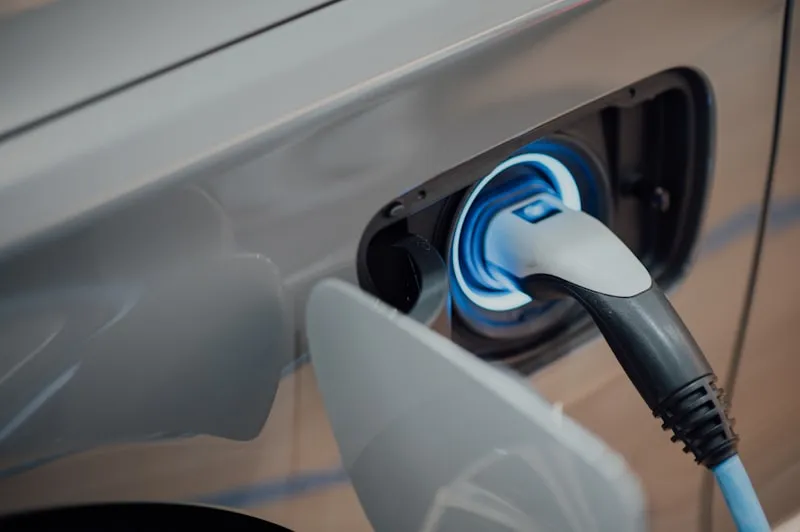
For about 95% of UK homes, 22 kW is the wrong home EV charger. Single-phase domestic supply — which roughly 95% of UK properties have — physically caps continuous charging at 7.36 kW (230 V × 32 A). A 22 kW wall unit on a single-phase house either won't operate, auto-downrates to 7.4 kW, or trips the main fuse on startup. Even if you have three-phase, the car's on-board charger is usually the bottleneck: every Tesla, every VW Group EV, every Polestar, every Volvo, every Kia EV6, every Hyundai Ioniq, most MG4s — all cap at 11 kW AC, so 22 kW does nothing for them.
For a typical UK driver — averaging 19 miles a day on DfT figures — a 7 kW charger on Intelligent Octopus Go fills the battery to comfortably more than needed inside the 6-hour cheap-rate window, every night, for about £1.50. A 22 kW unit doesn't buy you more cheap kWh; it just finishes the same job sooner and then sits idle for the rest of the off-peak window.
Genuine cases for 22 kW at home are narrow: three-phase already on the street + a car with a 22 kW on-board charger + irregular high-mileage use. Workplace bays, fleet vans and shared-charger sites are where 22 kW genuinely earns its keep — not the average UK driveway. Below, what's actually going on, why the marketing pushes the wrong number, and what the real next-generation home charging upgrade looks like.
The 7.4 kW ceiling nobody mentions
Every UK domestic single-phase supply is rated at 230 V. The maximum continuous draw a UK home EV charger pulls is 32 A. Multiply those together: 230 × 32 = 7,360 W — 7.36 kW. That's the hard physical ceiling on any AC charger plugged into a single-phase house. It doesn't matter how big the wall unit is, how shiny its marketing is, or how many digits its product name has. One phase, 32 amps, 7.36 kW. That's it.
To get past it you need three-phase incoming supply: three live wires at 400 V between phases (230 V per phase to neutral), giving you 3 × 32 A = roughly 22 kW continuous. Three-phase is genuinely common in commercial properties, farms, larger detached country homes and some recent new-builds spec'd for heat pumps + EV + solar. In your typical UK terrace, semi, flat or post-war detached, it's vanishingly rare. Industry consensus puts three-phase prevalence in UK domestic properties at around 5% (or less — some sources cite as low as 1%).
The Smart Charge Point Regulations 2021 don't change this. The G98/G99 rules don't change it (and only apply to export anyway). BS 7671 doesn't change it. Physics doesn't change.
What a 22 kW charger actually does on a single-phase supply
Three behaviours, depending on the unit:
- Most 22 kW units refuse to start — they detect single-phase and lock out
- Some hybrid units (Wallbox Pulsar Plus, EO Mini Pro 3 in dual-mode variants) auto-downrate to 7.4 kW. You've paid 22 kW money for 7.4 kW capacity.
- A poorly-spec'd install can trip the main fuse on startup as the charger tries to draw more than the supply can deliver — usually instant, sometimes intermittent depending on other house loads
Your car probably can't drink it anyway
Even on a three-phase supply with a genuine 22 kW wall unit, the bottleneck moves from the supply to the car. Every electric vehicle has an on-board charger (OBC) that converts AC from the wall unit into DC for the battery. Whatever the OBC's maximum rating is, that's what the car will accept. The wall unit just sits there delivering whatever the car asks for.
Here's how the UK's most-bought EVs map onto the AC limit (figures as of May 2026):
| Car | On-board AC charger | Real rate on single-phase |
|---|---|---|
| Tesla Model Y (UK best-seller) | 11 kW (3-phase) | 7.4 kW |
| Tesla Model 3 | 11 kW (3-phase) | 7.4 kW |
| VW ID.3 / ID.4 / ID.5 | 11 kW | 7.4 kW |
| Polestar 2 / Volvo EX30 | 11 kW | 7.4 kW |
| Kia EV6 / Hyundai Ioniq 5/6 | 11 kW | 7.4 kW |
| MG4 (most variants) | 11 kW | 7.4 kW |
| Renault Zoe R135 (older) | 22 kW (rare) | 7.4 kW |
| Renault 5 E-Tech | 11 kW (V2G ready) | 7.4 kW |
| BMW iX M60 (option) | 22 kW | 7.4 kW |
| Porsche Taycan (option) | 22 kW | 7.4 kW |
| Nissan Leaf (most) | 6.6 kW | 6.6 kW |
The Tesla Model Y was the UK's best-selling EV in 2025 with 24,298 registrations — more than the next four combined. Its on-board charger tops out at 11 kW on three-phase, 7.4 kW on single-phase. The same is true of every VW Group EV, every Polestar, every Volvo EX30/EX90, every Kia EV6, every Hyundai Ioniq, and most MG4 variants.
Cars that actually accept 22 kW AC are mostly premium and mostly optional: BMW iX M60 standard, Porsche Taycan and Audi e-tron GT as factory options, Renault Zoe R135 (older, not currently in production), and a handful of recent Renault, Smart and BYD models. If you're not in that list, even a perfect 22 kW install delivers exactly the same charge rate as a 7 kW unit. You've spent the upgrade money on nothing.
The Octopus math kills the rest of the argument
The strongest case people make for 22 kW is "I want to charge fast." But for home charging on a smart EV tariff, fast isn't the question — fast enough inside the cheap window is. And 7 kW is comfortably fast enough.
Intelligent Octopus Go gives you 6 hours of off-peak rate between 23:30 and 05:30 every night, plus smart-dispatched extra cheap slots when the grid has spare renewables (often a few more hours in spring and autumn). The off-peak rate dropped to 5.49 p/kWh in April 2026. At 7 kW for 6 hours that's:
- 42 kWh of charge per night
- ~145 miles of range added (at a typical UK 3.5 miles/kWh)
- Cost: ~£2.31
The UK average daily drive is 19 miles (Department for Transport, 2024 figures). Even doubling that for a longer-commuting household — say 40 miles a day — you need 12 kWh of charge per night. That's 1 hour 45 minutes at 7 kW. The rest of the off-peak window, your car sits there doing nothing.
A 22 kW charger finishes the same daily 40-mile top-up in 35 minutes instead of 1 hour 45, and then your car is unplugged-but-still-connected for the next 5 hours of cheap rate that you can no longer use. You've spent thousands of pounds to finish charging earlier and then have nothing to do with the rest of the cheap window.
Worse: from April 2026, Octopus introduced a 6-hour cap on super-cheap smart-dispatched slots. Going faster doesn't unlock more cheap energy — it just uses up your daily allowance sooner.
The right metric isn't kW, it's miles per hour
Translate the headline kW into useful real-world terms:
- 7 kW (single-phase) → 25–30 miles of range per hour of charging
- 11 kW (three-phase, capped by car OBC) → 38–45 miles per hour
- 22 kW (true) → 60–80 miles per hour
Then ask: do I genuinely drive again before 8 a.m.? For 99% of UK households, the honest answer is no.
The real cost of going 22 kW
Here's where the maths gets uncomfortable. The headline price difference between a 7 kW and a 22 kW wall unit looks small — maybe £200–£400 on the hardware. The actual cost-of-installation difference is much bigger:
| Scenario | Hardware | Install | Supply upgrade | Total |
|---|---|---|---|---|
| 7 kW on existing single-phase | £400–£700 | £700–£1,100 | £0 | £1,100–£1,800 |
| 22 kW where three-phase exists | £600–£1,200 | £1,100–£1,500 | £0 | £1,700–£2,700 |
| 22 kW + simple 3-phase upgrade | £600–£1,200 | £1,100–£1,500 | £1,800–£3,000 | £3,500–£5,700 |
| 22 kW + reinforcement-needed upgrade | £600–£1,200 | £1,100–£1,500 | £5,000–£15,000+ | £6,700–£17,700+ |
| V2G bidirectional DC (Quasar 2-class) | ~£6,100 | £1,500–£3,000 | £0 | £7,600–£9,100 |
For the typical UK home — single-phase supply, no three-phase on the street — getting to a working 22 kW install means a DNO three-phase upgrade. UK Power Networks' minimum charge is £1,800 inc VAT; realistic full upgrades run £3,500–£7,000; complex jobs needing transformer or feeder reinforcement can hit £15,000 or more. Timelines are 6–12 weeks at the minimum, longer where reinforcement is required. And the homeowner pays — DNOs aren't obliged to fund discretionary upgrades.
So the realistic decision isn't "spend £200 more on a 22 kW wall unit" — it's "spend £2,000–£14,000 more on a complete supply transformation." For an EV that the OBC can't accept more than 11 kW into anyway. To run charging cycles a 7 kW charger already completes inside the cheap window.
When 22 kW genuinely earns its keep
There are three legitimate use-cases for 22 kW that we'd never argue against:
- Three-phase supply already exists, and the car has a 22 kW OBC. If you've got three-phase coming in (heat pump install, EV-spec new-build, rural farm property, larger period home with the right legacy supply) AND you drive a BMW iX M60, a Porsche Taycan, a Renault 5 E-Tech, or another genuinely 22 kW-capable EV — fit the 22 kW unit. It costs marginally more, you have the supply, you have the car. Easy yes.
- Very high mileage with irregular hours. If you drive 30,000+ miles a year with no predictable overnight charging window — sales reps, district nurses, mobile tradespeople who need to top up mid-shift — the 6-hour Octopus window doesn't always fit your life. A 22 kW unit lets you grab a 90-minute charge during the day and cover three hours of cheap-rate work in 45 minutes. Real edge case, but real.
- Workplace, fleet, and shared-charger sites. This is where 22 kW actually shines. Visitor parking with 1–3 hour dwell times. Van fleets that need top-ups between rounds. Pool cars on rotation. Shared bays where the next person plugs in 90 minutes after the last. 22 kW (often with load-managed sharing across multiple posts) is the right tool for these jobs. Workplace Charging Scheme grants — £500 per socket, up to 40 sockets — exist precisely for this use case.
The actual upgrade worth waiting for: V2G
Here's the angle that none of the "22 kW vs 7 kW" marketing wants to talk about. The next meaningful step-change in domestic EV charging isn't faster AC. It's bidirectional DC.
Vehicle-to-grid (V2G) and vehicle-to-home (V2H) chargers convert AC from your supply into DC for charging, AND can do it in reverse — pulling DC from the car's battery, converting it back to AC, and either powering your home or selling to the grid. The car becomes a household battery and a peak-shifting asset, not just a load.
What's actually available in the UK in 2026:
- Octopus Power Pack — launched 2025 with BYD. Bundle includes a V2G-capable BYD Dolphin, a Zaptec Pro bidirectional charger, and the Power Pack tariff for under £300/month all-in. Marketed as "free home charging" — Octopus harvests the grid-arbitrage value in exchange. Typical driver saves around £620/year versus the standard Octopus Flexible tariff.
- Wallbox Quasar 2 — CCS2 bidirectional unit, up to 12.8 kW. UK status as of May 2026 is still register-your-interest only, no firm retail date. European RRP ~£6,100; total install £7,600–£9,100. Confirmed compatible with Kia EV9 and Cupra Born 77 kWh in the UK; more cars to follow.
- Mobilize PowerBox Verso — Renault's V2G hardware for the Renault 5 E-Tech, Megane E-Tech and Alpine A290. UK launch April 2026.
- Indra Smart Pro V2H — Welsh-manufactured V2H unit, OVO/Kaluza trial heritage. Available now.
- Sigenergy SigenStor 25 kW EV DC — combined home battery + V2H/V2G, integrated with the SigenStor solar/battery ecosystem.
The economics for V2G hardware bought outright currently take 10+ years to pay back at DIY level. That's why the Octopus Power Pack bundle matters — by subsidising the hardware and harvesting the arbitrage value, Octopus brings V2G economics into a viable monthly cost for the customer.
The trajectory is clear: by 2027–28, mainstream CCS2 bidirectional units (Quasar 2-class) at retail prices closer to £3,000–£4,000, with proper consumer tariffs (not just Octopus's bundle), will fundamentally change what "home charging" means. The £4,000 you'd spend today on a futile three-phase upgrade is roughly a Quasar-2-class deposit in 2028.
Why V2G needs CCS2, not AC
Bidirectional power flow through AC requires bidirectional power electronics on both ends — including in the car's on-board charger. Almost no current EV supports it. Bidirectional DC, by contrast, lets the wall unit handle the conversion in both directions, and the car's battery can be addressed directly through the CCS2 connector it already has for DC rapid charging. That's why Wallbox, Octopus, Mobilize and Sigenergy have all settled on DC CCS2 for V2G, not faster AC. The Type 2 AC connector is at its functional limit; CCS2 has years of headroom.
The verdict
Decision framework, in plain English:
- Single-phase supply + average mileage + mainstream EV: 7 kW. End of conversation.
- Single-phase supply + heavy mileage but predictable overnight: 7 kW. The cheap window covers it.
- Single-phase supply + heavy mileage + irregular hours: 7 kW, plus accept that occasional public rapid charging is part of the deal.
- Three-phase supply already in + 11 kW car: fit a 22 kW unit if the price difference is small (it'll deliver 11 kW). No supply upgrade needed.
- Three-phase supply already in + 22 kW car: 22 kW unit, fit it, enjoy.
- Single-phase supply + considering paying for a three-phase upgrade: don't. Save the money, fit a 7 kW now, and put the difference towards a CCS2 bidirectional unit in 2027–28.
- Workplace, fleet, shared-bay scenario: 22 kW, almost always, with load-managed sharing across multiple posts where applicable.
The mainstream 22 kW marketing is solving last decade's problem. The argument used to be: AC charge rates will keep rising, futureproof yourself, buy bigger. That argument made sense when EVs had 24 kWh batteries and DC rapid was rare and expensive. In 2026, with 60–80 kWh batteries, ubiquitous DC rapid, smart tariffs that reward off-peak filling, and CCS2 bidirectional emerging as the next step-change — chasing higher AC numbers is buying yesterday's spec sheet.
The right home charger for almost every UK household in 2026 is a properly installed, properly commissioned, OZEV-authorised 7 kW unit with built-in O-PEN protection and good tariff integration. The money you save not chasing 22 kW is your deposit on the V2G install that will actually matter when you replace your EV.
Common questions
Can I install a 22 kW home charger on a single-phase supply?
The unit can physically be wall-mounted, but it cannot deliver 22 kW. Some 22 kW chargers refuse to operate on single-phase entirely; others auto-downrate to 7.4 kW (the single-phase maximum at 230 V × 32 A). Either way, you pay for capacity you literally cannot use. To deliver 22 kW you need a three-phase incoming supply — which most UK homes do not have.
Do any UK cars actually charge at 22 kW AC?
Yes, but the list is short and dominated by premium models: BMW iX M60 (standard), Renault Zoe R135 (older), Porsche Taycan (option), Mercedes EQS/EQE (option), Audi e-tron GT (option), Smart #1/#3, some configs of MG4, Kia EV6 and Hyundai Ioniq 5. The UK best-sellers — Tesla Model Y, Tesla Model 3, all VW Group EVs, Polestar 2, Volvo EX30 — cap at 11 kW AC, and on a single-phase supply they pull just 7.4 kW. For most UK drivers, the car is the bottleneck before the wall unit ever becomes one.
How much does it cost to upgrade a UK home to three-phase?
UK Power Networks quotes a minimum of £1,800 inc VAT where three-phase is already on the street. Typical realistic costs are £3,500–£7,000. If the DNO needs to reinforce the network (transformer upgrade, cable pull from a distant feeder), costs can reach £15,000+. Timelines are 6–12 weeks minimum, and the homeowner pays — the DNO is not obliged to fund discretionary upgrades.
Will 22 kW future-proof my home for the next EV?
No — and this is the cleanest argument against 22 kW. The next domestic charging upgrade isn't faster AC, it's bidirectional DC (V2H / V2G), which uses CCS2 rather than the Type 2 AC connector. Wallbox's Quasar 2 bidirectional unit, Octopus's Power Pack scheme with the Zaptec Pro, and the Mobilize PowerBox Verso are all CCS2 bidirectional. A 22 kW AC unit fitted today is solving a problem the next generation of cars and tariffs has already moved past.
What's the off-peak window on Intelligent Octopus Go and why does it matter?
Intelligent Octopus Go gives 6 hours of cheap-rate charging between 23:30 and 05:30 (with smart-dispatched extra slots when the grid has spare renewables). The off-peak rate fell to 5.49 p/kWh in April 2026. At 7 kW × 6 hours that's 42 kWh per night — more than 145 miles of range, vastly more than the UK average daily drive of 19 miles. A faster charger doesn't buy you more cheap kWh; it just finishes the same job sooner, then sits idle for the rest of the window.
When does 22 kW genuinely make sense at home?
Three cases: (1) you already have a three-phase incoming supply and you drive a car with an 11 kW or 22 kW on-board charger, (2) you're doing 30,000+ miles a year with irregular hours where the cheap overnight window isn't always enough, or (3) you have a workplace, fleet or shared-bay situation where multiple cars need short turnaround top-ups during the day. For a typical single-driver home with average mileage and a Tesla / VW / Polestar / Kia / Hyundai / MG, 7 kW is the right answer.
How fast is 7 kW in real terms?
Around 25–30 miles of range per hour in a typical UK EV (3.5 miles per kWh assumed). A 60 kWh battery refills from 20% to 80% in roughly 5 hours — easily inside the overnight window. From near-empty, a full overnight at 7 kW gives you 56 kWh, which is more than most UK EV batteries can hold.
Sources & further reading
- Smart Charge Point Regulations 2021 — official guidance — gov.uk
- Engineering Recommendation G99 Issue 2 (10 March 2025) — Energy Networks Association
- DfT Road Traffic Statistics — average mileage by vehicle type — Department for Transport
- Intelligent Octopus Go — current rates and windows — Octopus Energy
- Octopus Power Pack — UK V2G bundle — Octopus Energy
- Wallbox Quasar 2 — UK product page — Wallbox
- BS 7671 Section 722 — EV charging installations — IET / BSI
Editorial standards
How this guide was put together
Independent
Editorially independent UK guides — no sponsored content
Primary sources
Every guide cites gov.uk, Ofgem, MCS and manufacturer data
Current
Updated as schemes, prices and regulations change
Get a quote that's right-sized for your home
Speak to OZEV-authorised installers who'll size the charger to your supply, your car and your tariff — not to the headline kW number.
Get Free Quotes