Solar Together UK 2026: How It Works
Solar Together is a council-backed group-buying scheme that typically saves UK homeowners 20–35% on solar PV installs. Here's how the reverse auction works.
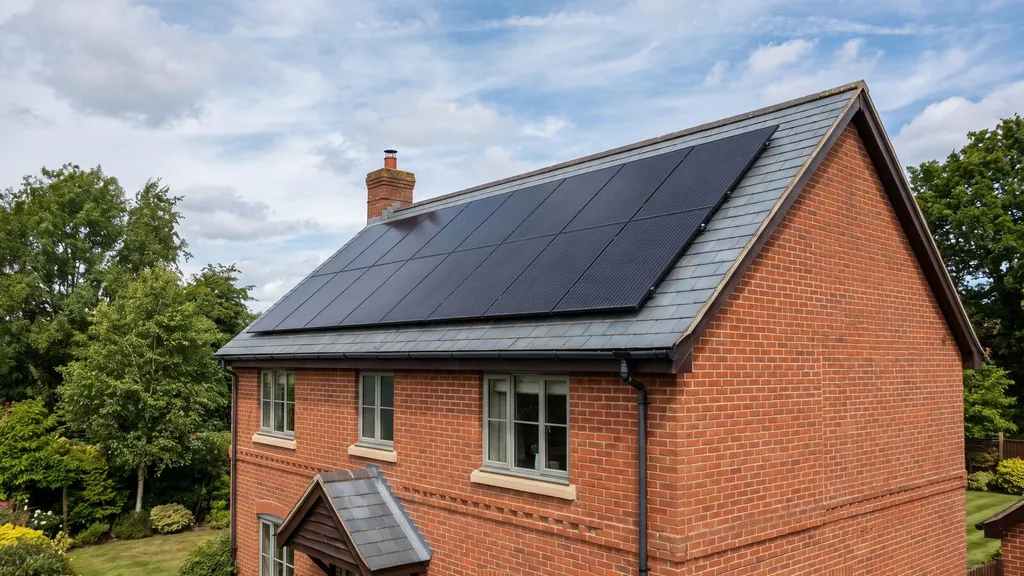
Solar Together is a council-backed group-buying scheme for solar PV (and in many areas, battery storage and EV chargers too). It uses a reverse-auction format to secure bulk-discounted pricing from vetted installers, then passes the savings on to individual households. Typical savings are 20–35% versus the direct retail market — meaningful on installs that often cost £6,000–£10,000.
It's not technically a government grant — it's a procurement mechanism — but it's council-led, free to register, and one of the few schemes available to owner-occupier households regardless of income or property type. Worth knowing about, even if you decide not to use it.
How the scheme works
- Council launches a scheme window — typically once or twice a year per region. Coverage spans many UK regions: Greater London, Greater Manchester, West Midlands, Norfolk, Suffolk, Lincolnshire, parts of Wales, Scotland, and increasingly others.
- You register for free at the council's Solar Together page (or via solartogether.co.uk). Registration takes a few minutes and asks for property details, roof orientation, electricity usage, and which products you're interested in.
- The council runs a reverse auction with pre-vetted installers (typically MCS-certified, RECC or HIES member, IBG-backed). Installers bid the lowest price they'll offer to the cohort.
- You receive a personal offer based on the winning installer's bid plus a desktop survey of your specific roof. The offer is fixed-price and includes installation, MCS certificate, scaffolding, DNO notification, and SEG eligibility.
- You accept or decline — no obligation, no fee. If you decline, that's the end of it. If you accept, the installer carries out a final on-site survey and installs.
What's typically included in the offer
- Solar PV system sized to your roof and usage
- Optional battery storage (most schemes; some areas separate the bundle)
- Mounting, inverter, electrical work
- Scaffolding (where required)
- MCS certificate (required for SEG)
- G98/G99 DNO notification
- Insurance-Backed Guarantee (10–15 years typical)
- 0% VAT applied (until 31 March 2027)
What it can save
Savings vary by scheme cohort and demand, but typical benchmarks (vs going direct to an MCS installer for the same spec):
- 4 kW solar-only system: £6,500–£8,500 direct → £5,500–£7,000 via Solar Together (saving ~£1,000–£1,500)
- 4 kW solar + 5 kWh battery: £9,000–£11,500 direct → £7,500–£9,500 via Solar Together (saving ~£1,500–£2,000)
- 6 kW solar + 10 kWh battery: £12,000–£15,500 direct → £10,000–£13,000 via Solar Together (saving ~£2,000–£2,500)
Crucially, these are not "discounts off RRP" — they're real reductions versus typical UK retail prices for the same kit and quality. The mechanism works because the winning installer secures dozens or hundreds of installs in a small geographic area in a short window, reducing their per-install marketing and travel costs significantly.
Always compare against a second quote
Solar Together usually wins on price, but not always. Get at least one independent quote from a local MCS installer to benchmark the offer. If Solar Together is £800+ cheaper, go with it. If they're within a couple of hundred pounds of each other, the local installer's accessibility for warranty/service is often worth more than the modest saving.
Pros
- Significant savings on a major capital cost — typically 20–35%
- Free to register, no obligation — you only commit when you accept the personal offer
- Pre-vetted installers — councils require MCS certification, RECC/HIES membership, IBG, financial checks
- Fixed-price personal offers — no upsell surprise mid-project
- One scheme covers solar + battery + (sometimes) EV charger — simpler than separate procurement
- Council oversight adds an extra layer of consumer protection vs going direct
Cons
- Limited to one installer per cohort — you can't shop between several Solar Together installers
- Brand of panels/inverter/battery determined by the winning bid — usually mainstream brands, but no choice
- Install timing is queue-based — typical wait 6–12 weeks after accepting; busy schemes can be longer
- Schemes don't run year-round — windows are typically 4–8 weeks; if you miss your council's window you may wait 6+ months for the next one
- Personal offer is firmed by a final on-site survey — occasionally prices change at this stage if the roof is more complex than the desktop survey assumed
Where it's available
Solar Together has run in many UK council areas. As of 2026, active or recently active regions include (non-exhaustive):
- Greater London (London Solar Together)
- Greater Manchester
- West Midlands Combined Authority
- Norfolk and Suffolk
- Lincolnshire and Nottinghamshire
- Bedfordshire and Hertfordshire
- Various counties in the South West, East and Midlands
- Some Welsh and Scottish local authorities
Check whether your area has a current scheme at solartogether.co.uk — they list active and upcoming windows.
How does it interact with grants and 0% VAT?
Solar Together is fully compatible with:
- 0% VAT relief — applied automatically by the installer (until 31 March 2027)
- Smart Export Guarantee — the install qualifies for SEG payments via your chosen supplier (see our SEG guide)
- ECO4 / Warm Homes: Local Grant — generally not stackable on the same install (you can't double-fund the same kit), but the income-tested schemes may cover insulation alongside a Solar Together solar install
The combination of Solar Together + 0% VAT + SEG can bring the all-in cost of a typical 4 kW system with battery down to around £7,500 net of VAT, with ~£700–£900/year of bill savings — putting the payback period in the 8–10 year range.
Common questions
Is Solar Together a government grant?
Not exactly — it's a council-led group-buying scheme. The "grant-like" benefit is a price reduction via bulk procurement rather than a Treasury payment. From the homeowner's point of view, it functions similarly: free to register, no income test, automatic application of the discount.
What if my council isn't running Solar Together?
Many councils that don't use Solar Together run their own equivalent schemes (e.g. Big Community Switch, regional energy partnerships). Check your council's energy or environment pages, or sign up for notifications at solartogether.co.uk to be alerted when your area runs a scheme.
Are the installers any good?
The vetting is robust: MCS certification is required (mandatory for SEG eligibility anyway), plus RECC or HIES membership, financial stability checks, and on-site spot-checks of past installs. Customer satisfaction across published Solar Together cohorts has been broadly comparable to the direct-retail solar market. As with any installer, individual experiences vary — read reviews of the specific winning installer for your scheme before accepting.
Sources & further reading
- Solar Together (iChoosr) — iChoosr
- MCS Certified — find an installer — MCS
- Renewable Energy Consumer Code — RECC
Editorial standards
How this guide was put together
Independent
Editorially independent UK guides — no sponsored content
Primary sources
Every guide cites gov.uk, Ofgem, MCS and manufacturer data
Current
Updated as schemes, prices and regulations change
Want a tailored solar quote?
Get free quotes from MCS-certified solar installers — useful as a benchmark even if you also register with Solar Together.
Get Free Quotes