G99 Application UK: Cost & Timeline
A G99 application is the DNO pre-approval needed to connect larger solar, battery or V2G systems. When it's required, how long it takes, and how to skip it.
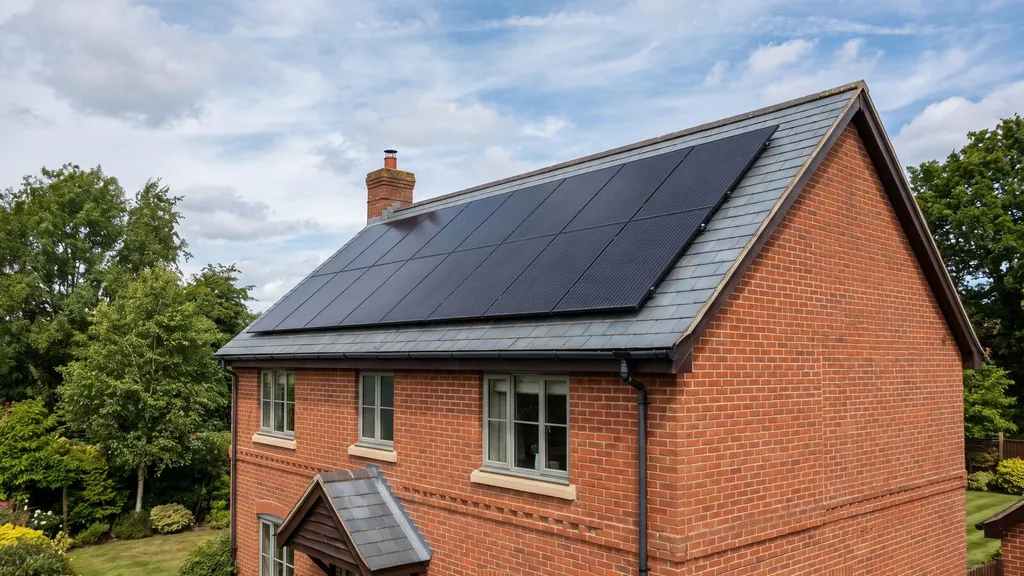
A G99 application is the approval your Distribution Network Operator (DNO) must give before you connect a larger generator — solar, battery storage, or a vehicle-to-grid charger — to the grid. It's required when the system can export more than 3.68 kW per phase. Smaller systems use the simpler G98 "fit and notify" route instead.
The headline facts: your installer submits it (not you), the DNO's official target is up to 45 working days but real-world timelines run anywhere from a few days to several months, and for a standard domestic install it's normally free. The single thing that catches people out is batteries — adding one often tips an otherwise G98 solar system into G99 territory, and many quotes don't flag the resulting wait.
Here's exactly when you need G99, what the process involves, how to read the timeline, and the legitimate way to skip it if a DNO delay would hold up your install.
G98 vs G99: which one applies to you
| G98 (fit & notify) | G99 (pre-approval) | |
|---|---|---|
| Threshold | ≤ 3.68 kW per phase (16A) | Above 3.68 kW per phase |
| Approval needed before install? | No — install, then notify within 28 days | Yes — DNO must approve before you commission |
| Typical timeline | Immediate | Official target 45 working days; real-world 1 day–6 months |
| Fee | Free | Usually free for domestic; some DNOs charge for studies |
| Who submits it | Your installer | Your installer |
| Common triggers | Most single-phase 4 kWp solar systems | Bigger arrays, most batteries, three-phase, V2G export |
The dividing line is 3.68 kW per phase (16 amps at 230V). Below it, your installer can fit the system and simply notify the DNO within 28 days (G98). Above it, the DNO has to approve the connection first (G99). On a typical single-phase UK home, that 3.68 kW ceiling is reached more easily than people expect — which is why so many battery installs end up needing G99.
What actually triggers a G99 application
- Solar arrays over ~3.68 kWp on a single-phase supply where the inverter isn't export-limited
- Most home batteries. G98/G99 is judged on total inverter export rating, not battery capacity. A 5 kW hybrid battery inverter on top of a 3.68 kW solar inverter usually pushes the combined export above the G98 limit.
- Three-phase systems above 11.04 kW (3.68 kW × 3 phases — three-phase homes get far more G98 headroom)
- Vehicle-to-grid (V2G) chargers, because the car becomes an exporter — a bidirectional unit is treated as a storage generator and needs G99
The battery trap most quotes don't spell out
A 4 kWp solar system with a 3.68 kW inverter is G98 — fit and notify, no wait. Add a 5 kW battery hybrid inverter and you're almost always into G99, with a DNO approval wait of weeks before you can commission. Plenty of homeowners hand over a deposit, then discover the install can't go ahead for two months. Ask your installer up front: "Is this G98 or G99, and if it's G99, what's the realistic timeline in my DNO area?"
The application process, step by step
- Your installer prepares the application — system design, inverter make/model and ratings, single-line diagram, and the manufacturer's G99 type-test certificate (proving the inverter meets the protection and anti-islanding requirements).
- They submit it to your DNO — the company that owns the local wires (UK Power Networks, National Grid Electricity Distribution, Northern Powergrid, SP Energy Networks, Electricity North West, or SSEN, depending on your region).
- The DNO assesses the local network — can it accept the export without voltage or capacity problems? For most homes the answer is straightforward yes.
- You get a connection offer — usually with no conditions for a domestic system; occasionally with an export limit or, rarely, a requirement for network reinforcement.
- Install and commission once the offer is accepted, then the installer confirms commissioning back to the DNO.
How long it really takes
The official position is a connection offer within 45 working days (about 9 weeks). The reality is far more variable:
- Days to 2 weeks — straightforward domestic application, unconstrained network, DNO with a fast small-scale process
- 4–9 weeks — typical for a standard battery/solar G99
- 2–6 months — constrained network area, application needing a study, or a backlogged DNO connections team
There's genuine regional variation — the same install can clear in days in one DNO area and take months in another. If timing matters (you're trying to beat a tariff deadline, or coordinating with other work), ask your installer what they're currently seeing from your specific DNO.
What it costs
For a standard domestic solar-and-battery connection, the G99 application is normally free — the DNO doesn't charge to process a small-scale connection. Costs only appear if the DNO requires a network study or physical reinforcement, which is uncommon for typical home systems. A good installer includes the application in their quote at no separate charge. Treat a large standalone "DNO fee" on a standard domestic job with suspicion.
How to skip the G99 wait: export limitation
If a DNO delay would hold up your install, there's a legitimate workaround: an export limitation device. This caps how much your system can push to the grid at 3.68 kW per phase, keeping the whole install within G98 — so you can fit and notify immediately, no pre-approval needed.
Crucially, you still generate and use the full output of your panels and battery — only the surplus pushed to the grid is limited. For most homes, which self-consume the bulk of their generation anyway, the practical loss is small. The trade-off: if you're on a high-rate export tariff and would otherwise export a lot, capping export caps that income. On a typical self-consumption-led setup, export limitation to dodge a multi-month G99 wait is often the sensible call. See our SEG export tariffs guide to weigh the export-income side.
Three-phase homes get a much easier ride
The 3.68 kW limit is per phase. A single-phase home (most UK properties) hits it at 3.68 kW total. A three-phase home gets 3.68 kW × 3 = 11.04 kW before G99 kicks in — so larger solar-plus-battery systems can stay G98. If you have three-phase (more common in larger, rural, or recently-upgraded properties), it dramatically simplifies bigger installs. See our planning & DNO guide for the full picture.
What to ask your installer
- "Is my install G98 or G99?" — and if G99, "what's the current timeline for my DNO?"
- "Does the quote include the DNO application, or is there a separate fee?"
- "If G99 would delay things, can we export-limit to stay G98 — and what would that cost me in export income?"
- "Will you handle the notification and give me the connection paperwork?" (You'll need it for SEG and for a future house sale.)
The G99 process is routine for a competent MCS installer — the point isn't to fear it, it's to make sure you're not blindsided by a two-month wait you weren't told about, and that the paperwork is done properly so your export payments and house sale aren't held up later.
Common questions
What is a G99 application?
G99 is the Energy Networks Association engineering recommendation that governs connecting a generator (solar, battery, wind, or a vehicle-to-grid charger) to the grid where its output exceeds 3.68 kW per phase. Unlike its smaller sibling G98 — which lets you install first and notify within 28 days — G99 requires the Distribution Network Operator (DNO) to approve the connection before you commission it. Your installer submits the application on your behalf.
How long does a G99 application take?
The official DNO target is up to 45 working days (around 9 weeks) to issue a connection offer. In practice it varies enormously — straightforward domestic applications on an unconstrained part of the network can come back in days, while applications in a constrained area, or ones needing a network study, can stretch to several months. If your installer has quoted "G99," build at least 6–10 weeks into your timeline and don't pay for kit you can't commission yet.
How much does a G99 application cost?
For most domestic solar-and-battery installs the G99 application itself is free — the DNO doesn't charge for processing a standard small-scale connection. Costs only arise if the DNO needs to carry out a network study or reinforcement (rare for typical home systems, more likely for large arrays or constrained areas). Your installer should fold the application into their quote; be wary of any installer charging a large separate "DNO fee" for a standard domestic job.
Do I need G99 for a home battery?
Often, yes — and this catches people out. G98/G99 is assessed on total inverter export rating, not battery capacity. A 4 kWp solar system on a 3.68 kW inverter is G98. Add a 5 kW hybrid battery inverter and the combined export capability usually pushes you into G99 territory, because the battery can also export. Many quotes don't make this clear, so ask explicitly: "Is this install G98 or G99?"
Can I avoid a G99 application?
Sometimes. Installers can fit an export limitation device that caps how much the system can push to the grid at 3.68 kW per phase, keeping the install within G98 even if the panels/battery could in theory export more. You still generate and self-consume the full amount — only grid export is limited. This is a legitimate way to skip the G99 wait, and worth asking about if a DNO delay would hold up your install. (It does cap your export income on a high-export tariff, so weigh it up.)
What happens if I install without notifying the DNO?
It's a breach of your connection agreement and the Distribution Code. Practically: you may be unable to get a Smart Export Guarantee tariff (suppliers ask for proof of a compliant connection), it can complicate a house sale, and an unregistered generator can cause issues for the local network. A reputable MCS installer always handles the G98 or G99 notification as part of the job — if yours is vague about it, that's a red flag.
Why are G99 applications taking longer in 2026?
The GB grid connection queue has been heavily congested, and the regulator and National Energy System Operator have been reforming it (the "Gate 2" process) to clear out speculative large-scale projects and prioritise ready-to-build ones. That reform is aimed at big generators, not home solar — but DNO connections teams have been under load, which is part of why domestic G99 timelines vary so much by region. The direction of travel is toward faster, more standardised small-scale connections.
Sources & further reading
- Engineering Recommendation G99 — connecting generation — Energy Networks Association
- Connect a home generation or storage device — gov.uk
- Smart Export Guarantee — eligibility — Ofgem
- Energy Networks Association — connections — ENA
Editorial standards
How this guide was put together
Independent
Editorially independent UK guides — no sponsored content
Primary sources
Every guide cites gov.uk, Ofgem, MCS and manufacturer data
Current
Updated as schemes, prices and regulations change
Getting solar or a battery?
A good installer handles the G98/G99 notification as part of the job. Get free quotes from MCS-certified installers.
Get Free Quotes