El Niño and Your UK Energy Bills (2026/27)
A record El Niño is building. What it means for UK heat pumps, solar, batteries and EV charging this winter, with the Met Office caveats the headlines drop.
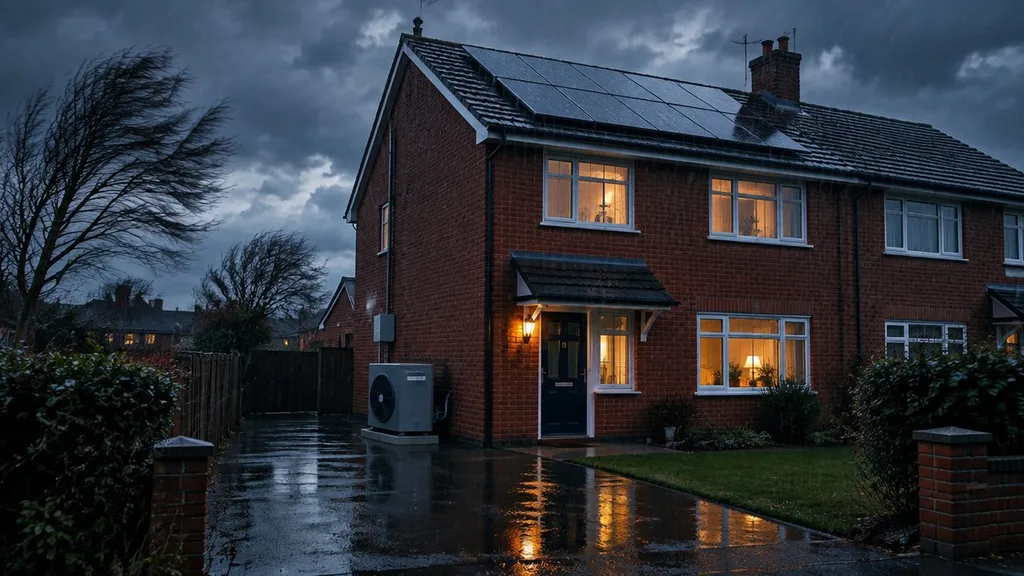
The short version: a record-strength El Niño is very likely this winter, but the UK signal points to a mild, wet and windy start rather than a big freeze. The Met Office puts the chance of a warm, wet autumn at roughly one and a half to two times higher than normal. The raised risk of cold snaps comes later, in January to March 2027. For your home that means storm exposure and power cuts are the near-term worry, not frozen pipes, and the heavy heating bills are most likely to land after Christmas rather than before it.
Expect to read a lot of "coldest winter in decades" over the next few weeks. That is not what the underlying forecasts say. Here is what the primary sources actually show, and what it means if you heat with a heat pump, generate with solar, store in a battery or charge a car overnight.
What is actually happening in the Pacific
NOAA's Climate Prediction Center has an El Niño Advisory in force. In its 10 September discussion, the key Niño-3.4 sea surface temperature index sat at +1.8°C above average for August, with a greater than 90% chance of a very strong event through the 2026/27 winter. There is a roughly 75% chance that October to December reaches +2.5°C or higher, which would match or exceed the strongest events recorded since 1950.
So the event itself is not in doubt, and it is genuinely exceptional. The uncertainty is entirely about what it does to Britain.
Why the UK link is weaker than the headlines imply
El Niño is a tropical Pacific phenomenon. Its influence on north-west Europe is indirect, arriving through knock-on effects on the Atlantic jet stream, and it has to compete with drivers that have a firmer grip on British weather: the North Atlantic Oscillation and the Quasi-Biennial Oscillation. Government analysis states plainly that historical data shows no systematic increase or decrease in UK annual average temperature during El Niño years.
What the evidence does support is a shift in the shape of the season. Independent assessments from the Met Office, the University of Reading and the Science Media Centre describe the same two-phase pattern: mild, stormy autumn and early winter, followed by a raised chance of colder, blocked conditions later on. The Science Media Centre's wording is worth keeping in mind, that powerful El Niños typically bring mild, stormy autumns and early winters "followed by bitter cold, although this isn't set in stone".
One honest caveat that applies to all of this
Seasonal outlooks are shifts in probability, not forecasts. They cannot tell you the date, location or severity of any individual storm or cold spell. And because this El Niño may end up the strongest on record, the Met Office has flagged that its scale is effectively unprecedented, so the historical analogues everyone is reasoning from may not hold. Plan for both halves of the winter and ignore anything that gives you a date.
The two-phase winter, and what each half does to your kit
| Early winter (Oct to Dec 2026) | Late winter (Jan to Mar 2027) |
|---|---|
| Raised chance of strong westerlies and low pressure | Raised chance of easterlies and northerlies |
| Mild, wet, windy. Storms and flood risk | Shorter, sharper cold snaps |
| Heat pumps run at decent efficiency, but defrost more often | Heat pumps work hardest. Highest bills of the year |
| Very little solar generation. Storm exposure on the roof | Solar starts to recover from late February |
| Lots of wind on the grid. Cheap overnight slots more likely | Still, cold spells are when power gets expensive |
| Power cuts from named storms are the main disruption risk | Reduced EV range and slower charging in the cold |
Heat pumps: mild and damp is harder work than you would think
The intuition is that a mild winter is easy on a heat pump and a cold one is hard. Broadly true for total energy used, because a milder winter simply demands less heat. But efficiency is a different question, and this is where a wet El Niño winter has a sting in it.
An air source heat pump pulls heat out of outdoor air across an evaporator coil. When that coil drops below freezing while the air around it is damp, moisture freezes onto the fins. The unit then has to run a defrost cycle, briefly reversing to melt the ice off, which costs energy and delivers no useful heat to your home. The worst conditions for this are not deep cold. They are damp air hovering between roughly 0 and 6°C, which is close to a description of a mild, wet British winter. A crisp, dry -5°C day can actually see fewer defrost cycles than a drizzly 3°C one.
The practical consequence is that a mild, soggy winter can deliver a worse seasonal efficiency figure than the headline SCOP suggests, even while your total bill comes in lower than a cold year. If you want to keep the number down, the levers are the same as always: flow temperature, a sensible heating schedule and the right tariff. Our heat pump running costs guide has the current numbers, and the air source heat pump guide covers how the units behave across the temperature range.
Solar: the smaller issue is generation, the bigger one is wind load
Nobody should expect much from a UK solar array between November and February. Output in midwinter is a small fraction of the summer figure regardless of what the Pacific is doing, so a cloudier winter makes a modest difference to an already low number. If your system is sized sensibly, this is not the thing to worry about.
The stormier risk is mechanical. A run of named storms puts real uplift forces on roof-mounted panels, and that load lands on the mounting rails, the roof hooks and the flashing rather than on the panels themselves. Worth doing before the first big blow: check the array visually from the ground for any panel sitting proud of its neighbours, clear gutters so water is not backing up under tiles, and dig out your installation paperwork so you know who is liable if something moves. A properly specified MCS install should be engineered for local wind loading, which is one of the less glamorous reasons the certification matters. See panels and inverters for how the components differ, and are solar panels worth it for the wider payback picture.
Batteries: yours probably will not keep the lights on
This is the one most people get wrong, and a stormy winter is when they find out. A standard home battery is not a power cut backup. In a normal grid-tied installation, the inverter is required to shut down when the grid goes off, for the safety of anyone working on the network. So when the street loses power, a full battery sitting in your garage does nothing at all.
Getting genuine backup requires specific extra hardware, usually an emergency power supply output or a changeover contactor, plus a separately wired circuit for the sockets you want to keep alive. Some manufacturers offer it, many installations simply do not have it, and it is rarely included unless you asked for it at the quote stage. If storm-season resilience is the reason you are considering a battery, ask that question in writing before you buy, because the answer changes the specification and the price. Our solar battery guide covers sizing and payback.
Wind: a windier winter is good for your bills, up to a point
Here is the genuinely positive part, and the government says it outright. A milder and windier start to winter would increase domestic wind power generation and reduce dependence on imported energy. More wind on the grid tends to push wholesale prices down, and it makes cheap overnight periods on flexible tariffs more frequent. If you charge a car or run a battery on a time-of-use tariff, a stormy December is quietly in your favour.
The scenario that hurts is the opposite one, and it belongs to the second half of winter: a cold, still, high-pressure spell with little wind and high heating demand. That combination is what drives grid prices to their nastiest levels. If the late-winter cold risk materialises, that is when it bites.
One thing a windy winter does not change: a domestic wind turbine is still the wrong purchase for the vast majority of UK homes. Roof-mounted turbines do not work in turbulent air around buildings, and a pole-mounted machine only makes sense on a genuinely exposed rural site. A stormy forecast is not a reason to reconsider that.
EVs and tariffs
Cold reduces usable range and slows charging, since the battery has to warm itself before it will accept full power. That is a late-winter issue on this outlook rather than a pre-Christmas one. The mitigation is preconditioning the car while it is still plugged in, so the energy comes off the cheap rate rather than out of the pack. If you are not already on a dedicated EV tariff, a winter with plenty of wind is a good one to be on a cheap overnight rate. See EV charging tariffs, and if you export solar, check your rate against our SEG export tariff comparison.
What to actually do
- Before the storms. Visual check of any roof-mounted array, clear gutters and drains, and confirm whether your battery has backup capability. Know where your stopcock and consumer unit are.
- Sort your tariff now. A windy winter favours time-of-use rates. Switching takes weeks, so doing it in October is worth more than doing it in January.
- Get the heat pump set up properly. Lowest workable flow temperature, sensible schedule, and a heat pump tariff if you are on a standard rate.
- Claim what you are owed. Check eligibility for the Warm Home Discount and Winter Fuel Payment before the cold half of winter arrives.
- Ignore the seasonal predictions. Including the optimistic ones. Prepare for a stormy December and a cold February, and you are covered either way.
El Niño and the UK winter, answered
Will El Niño affect the UK in 2026?
Yes, but less than the headlines suggest. El Niño happens in the tropical Pacific, thousands of miles away, so its effect on British weather is indirect and it competes with drivers that matter more here, chiefly the North Atlantic Oscillation and the Quasi-Biennial Oscillation. The Met Office is clear that El Niño does not determine what conditions we actually get. What it does is shift the odds: a raised chance of a mild, wet and stormy end to autumn and start of winter, and a raised chance of colder spells later in the season.
Is the UK going to have a cold winter in 2026?
Nobody knows, and anyone telling you otherwise in September is guessing. The honest position is that the current signal points to an unsettled, mild start rather than a guaranteed freeze. Government analysis puts the raised risk of cold easterlies and northerlies in early 2027, not in the run-up to Christmas. Note also that historical records show no systematic rise or fall in UK annual average temperature during El Niño years, so a strong El Niño on its own is not evidence of a cold winter.
What does El Niño mean for the UK?
In practical terms, a shift in probabilities rather than a forecast. Strong events have tended to bring milder, wetter and stormier conditions to the UK in late autumn and early winter, followed by an increased chance of colder, blocked weather later in the winter. The government notes that a milder and windier start would increase domestic wind power generation and reduce reliance on imported energy, which is one of the few reasonably direct links between El Niño and your bills.
Is it going to be a mild winter in the UK?
The first half is more likely to be mild than cold, on current signals. The Met Office three-month outlook published in September put the chance of a warm and wet autumn at roughly one and a half to two times higher than normal, with windier conditions arriving later in the season. That is a meaningful shift in the odds, not a promise. A mild average can still contain a brutal fortnight, and it is the sharp spells that drive the heating bills people remember.
Is the UK expecting snow again this winter?
Snow is normal in a British winter and this one is no different. The specific mechanism worth watching is a disruption to the polar vortex, sometimes a sudden stratospheric warming, which can open the door to cold easterly outbreaks. Strong El Niño events are associated with a raised chance of that happening in late winter. It cannot be predicted months ahead, so treat any September article promising a date for snow as entertainment.
How should I prepare for El Niño in the UK?
Treat it as two jobs. For the stormy early winter: check roof-mounted solar mountings and flashing before the first named storm, clear gutters and drains, and find out whether your battery actually provides backup in a power cut, because most do not. For the colder second half: get your heat pump running costs under control now by checking your tariff, and make sure you are claiming anything you are entitled to, such as the Warm Home Discount or the Winter Fuel Payment.
Sources & further reading
- ENSO Diagnostic Discussion (El Niño Advisory, 10 September 2026) — NOAA Climate Prediction Center
- Impacts of El Niño on the UK — gov.uk
- An unprecedented El Niño and its implications for the weather forecast — Met Office
- What does the latest long-range forecast tell us, and what role could El Niño play this autumn? — Met Office
- What might a Godzilla El Niño mean for the UK? (research briefing CBP-10901) — House of Commons Library
- Expert comments about El Niño and the UK — Science Media Centre
Editorial standards
How this guide was put together
Independent
Editorially independent UK guides, no sponsored content
Primary sources
Every guide cites gov.uk, Ofgem, MCS and manufacturer data
Current
Updated as schemes, prices and regulations change
Getting your home ready for winter?
Heat pumps, solar and batteries all behave differently in a mild, stormy winter. Get free quotes from qualified installers.
Get Free Quotes