Oil Boiler vs Heat Pump: Worth It in 2026?
Replacing an oil or LPG boiler with a heat pump in 2026 — running costs compared, the new £9,000 grant, and whether it actually pays. An honest guide.
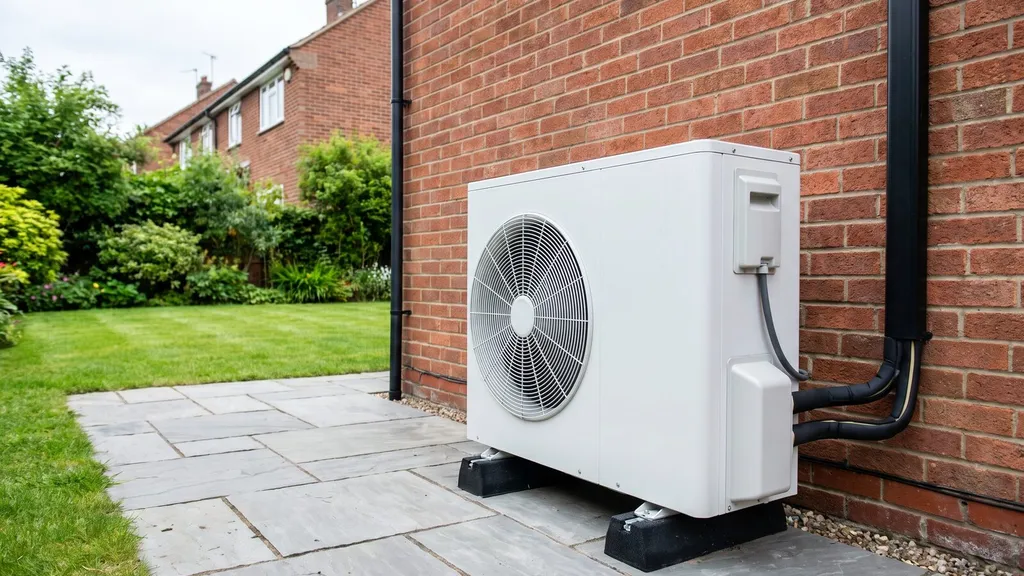
The short version: if you heat an off-grid home with oil or LPG, you have the strongest case for a heat pump anywhere in the UK — and from 21 July 2026 the Boiler Upgrade Scheme pays you £9,000 to make the switch. But "strongest case" isn't "automatic win". On LPG the sums are clear-cut. On oil, a heat pump only beats today's low oil price if you move to a specialist heat-pump tariff — the real prize is escaping oil's wild price swings, not a guaranteed monthly saving.
Off-gas-grid homes are where the UK's heat-pump push actually makes economic sense, and the government knows it — that's why the grant for these homes is now £1,500 higher than for everyone else. This guide gives you the honest running-cost picture, spells out exactly who gets the £9,000, and covers the property questions oil-heated homes need to ask before committing.
The £9,000 grant — who exactly qualifies
The uplift is live in the official gov.uk grant-values notice from 21 July 2026 to 31 March 2027. You get the full £9,000 only if all three are true:
- Your home is off the mains gas grid;
- You're replacing an oil or LPG system (not electric, not mains gas);
- You're fitting an air-to-water or ground-source heat pump.
Air-to-air and biomass don't get the uplift. Applications on or after 21 July 2026 get the higher rate automatically, and vouchers issued just before that date can be cancelled and reapplied at £9,000. See the full rules on our Boiler Upgrade Scheme page.
Why off-gas homes are the best case for a heat pump
For a home on mains gas, the running-cost argument for a heat pump is genuinely marginal — gas is cheap per kWh, and a heat pump on a standard tariff often just about matches it. That's not true off the gas grid. Oil and (especially) LPG are more expensive and far more volatile than mains gas, and they have no cheaper alternative waiting in the wings. When your only options are an expensive fossil fuel or electricity used three-times-over by a heat pump, the heat pump looks a lot more attractive.
Add the two financial levers — the £9,000 grant and 0% VAT (see our 0% VAT guide) — and off-grid homes get the most support, against the highest incumbent fuel costs, of anyone in the country. That's the case in a sentence. Now the numbers.
Running costs: the honest comparison
What matters isn't the price of the fuel — it's the cost of a unit of heat once you account for efficiency. A boiler turns about 90% of its fuel into useful heat; a heat pump turns each unit of electricity into roughly 3.2 units of heat (its seasonal performance factor, or SCOP). Here's how that shakes out at mid-2026 prices:
| Heating system | Fuel price (mid-2026) | Efficiency | Cost per kWh of heat |
|---|---|---|---|
| Mains gas boiler | ~6.3p/kWh | ~90% | ~7.0p |
| Heating oil boiler | ~5.9p/kWh | ~90% | ~6.6p |
| LPG boiler | ~9.1p/kWh | ~90% | ~10.1p |
| Heat pump — standard electricity tariff | ~25.9p/kWh | SCOP ~3.2 | ~8.1p |
| Heat pump — specialist heat-pump tariff | ~16p/kWh (blended) | SCOP ~3.2 | ~5.0p |
The uncomfortable truth the glossier guides skip: at mid-2026 oil prices, a heat pump on a standard electricity tariff (~8.1p) costs slightly more per kWh of heat than an oil boiler (~6.6p). The heat pump only wins on running cost once you move to a heat-pump tariff (~5.0p). Against LPG (~10.1p), the heat pump wins on any tariff.
What that means over a year
For a fairly typical off-grid home needing around 15,000 kWh of heat a year:
| System | Annual heating cost* | vs a heat pump on a heat-pump tariff |
|---|---|---|
| LPG boiler | ~£1,515 | Heat pump saves ~£765/yr |
| Oil boiler — mid-2026 low price | ~£990 | Heat pump saves ~£240/yr |
| Oil boiler — March 2026 peak (136p/litre) | ~£2,160 | Heat pump saves ~£1,410/yr |
| Heat pump — standard tariff | ~£1,215 | — |
| Heat pump — heat-pump tariff | ~£750 | — |
*Indicative only — your figure depends on your home's heat demand, your tariff and the day's fuel prices. But the shape is the point: LPG homes save comfortably; oil homes save modestly at today's prices and dramatically when oil spikes. Oil hit 136p/litre in March 2026 before falling back to ~77p by June — at that peak the oil boiler cost more than double a heat pump. A heat pump is, in effect, a hedge against the oil market.
The tariff is doing the heavy lifting
Notice how much rides on the electricity tariff. A heat pump on a standard variable tariff and one on a specialist heat-pump tariff can differ by ~£450 a year for the same house. If you switch, switching tariff is not optional — it's how the running-cost case is won. Read our guide to time-of-use tariffs (the same suppliers that do cheap EV rates do heat-pump rates).
The property questions oil homes need to ask
Off-grid homes are often older, larger and sometimes solid-walled — which means the install deserves more scrutiny, not less. A heat pump delivers heat at a lower flow temperature than an oil boiler, so the system has to be designed around that:
- Heat loss and emitters. A proper room-by-room heat-loss survey decides whether your radiators are big enough to run at 45–50°C. Many oil homes already have generously sized rads, which helps — but some will need a few upgraded. Underfloor heating, where present, is ideal.
- Insulation. You don't need a "perfect" house, but the cheaper wins — loft top-up, draught-proofing — lower the flow temperature you need and cut running costs. The EPC requirement for the grant was dropped in April 2026, so insulation is now a matter of economics, not eligibility.
- Space. You need somewhere outside for the unit and, indoors, a hot water cylinder. Most oil homes already have a cylinder (oil combis are rare), so this is often less disruptive than a gas-combi conversion. Removing the oil tank frees up space and eliminates the spill/theft risk.
- Flow temperature on the quote. Insist on a design flow temperature of 45–50°C. A quote pitched at 55°C+ is a sign the system is being sized to paper over undersized emitters — and it'll wreck your running costs and your SCOP. See what to look for in a heat pump.
Oil vs LPG: not the same decision
Both qualify for the £9,000, but the case is different:
- LPG → heat pump is close to a no-brainer. LPG is the most expensive of the common heating fuels, so the heat pump wins on running cost regardless of tariff, and the grant erases much of the upfront gap.
- Oil → heat pump is a judgement call on price stability. If cheap oil holds, your saving is modest without a heat-pump tariff. The reason to switch is that oil won't reliably stay cheap — and you also get rid of the tank, the deliveries, and the exposure to a globally traded commodity.
Is there a catch with keeping the oil boiler as backup?
Yes — hybrids (a heat pump plus a retained oil/LPG boiler) are not eligible for the Boiler Upgrade Scheme, which funds full replacement only. A correctly sized heat pump shouldn't need a fossil-fuel backup to get through a UK winter; if an installer is proposing to keep the oil boiler "just in case", treat it as a sign the heat pump may be undersized or the survey wasn't thorough enough.
The bottom line
If you're on LPG, switching to a heat pump is one of the clearest-cut upgrades in UK home energy right now. If you're on oil, it's a strong move for the right reasons — price stability, the £9,000 grant, and freedom from the tank — but go in with your eyes open on running costs and insist on a proper survey and a low design flow temperature. Either way, this is the moment the numbers are most in your favour: the grant is at a record £9,000 and 0% VAT runs until March 2027.
Oil boiler to heat pump — FAQs
Is it worth replacing an oil boiler with a heat pump?
For an off-gas home, this is the best case for a heat pump in the whole UK — but "worth it" depends on your fuel. If you're on LPG, a heat pump is almost always cheaper to run and the sums are straightforward. If you're on oil, it's more nuanced: at today's low oil price a heat pump on a standard electricity tariff isn't actually cheaper to run, and the win only appears on a specialist heat-pump tariff — or when oil prices spike, as they did to 136p/litre in March 2026. The £9,000 grant (from 21 July 2026) and the lack of any mains-gas alternative are what tip most off-grid homes towards switching.
Is a heat pump cheaper to run than an oil boiler?
Not automatically. At mid-2026 oil prices (~5.9p/kWh), an oil boiler delivers heat at roughly 6.6p/kWh — and a heat pump on a standard electricity tariff works out slightly dearer at around 8.1p/kWh. Move onto a specialist heat-pump tariff (blended ~16p/kWh) and the heat pump drops to about 5.0p/kWh — cheaper than oil. The bigger point is stability: oil is volatile, swinging from 64p/litre to 136p/litre and back inside two years, while a well-run heat pump gives you a predictable, hedged cost. LPG, by contrast, is dearer than both, so a heat pump beats it comfortably on any tariff.
Do I have to be off the gas grid to get the £9,000 grant?
Yes. The £9,000 rate applies only to off-gas-grid homes replacing an oil or LPG system with an air-to-water or ground-source heat pump. Homes on mains gas, or replacing electric heating, get the standard £7,500. Air-to-air heat pumps and biomass boilers don't get the uplift at all. Full detail is on our Boiler Upgrade Scheme guide.
Are oil boilers being banned or phased out?
There is no confirmed ban on replacing a broken oil boiler with another one. The previous plan to end new fossil-fuel boiler installs in off-gas homes from 2026 was scrapped, and policy now relies on incentives — the £9,000 grant and 0% VAT — rather than prohibition. So you're not being forced off oil. But the direction of travel is clear, and the grant is the most generous it has ever been, so if your boiler is near the end of its life it's a sensible moment to weigh up the switch.
What are the disadvantages of switching from an oil boiler to a heat pump?
The honest list: a higher upfront cost even after the grant; the need for a proper MCS heat-loss survey and possibly larger radiators to run at a lower flow temperature; the outdoor unit and a hot water cylinder both need space (though most oil homes already have a cylinder); and the running-cost saving isn't guaranteed unless you switch to a heat-pump tariff. Done badly — sized to run hot to compensate for undersized emitters — a heat pump can cost more than the oil boiler it replaced. Done well, in an off-grid home, it's one of the strongest cases going.
Can I keep my oil boiler as a backup (a hybrid system)?
Technically yes, but it won't get the grant. The Boiler Upgrade Scheme funds full replacement of the fossil-fuel system — a heat pump kept alongside a working oil or LPG boiler (a hybrid) is not eligible. If your heat pump is correctly sized to your home's heat loss, you shouldn't need the oil boiler as backup anyway; a good design copes with UK winters on its own.
Will a heat pump work in an old, rural house?
Yes — age isn't the barrier, heat loss is. Plenty of older, off-grid homes run heat pumps well; the key is a low enough flow temperature, which comes from adequate insulation and correctly sized radiators. Many oil-heated homes already have generously sized rads and a hot water cylinder, which helps. A good MCS installer will do a room-by-room heat-loss calculation and tell you honestly what (if anything) needs upgrading first. Be wary of anyone who quotes without surveying the fabric of the building.
Sources & further reading
- Notice of approved grant categories and values for the BUS (updated 21 July 2026) — gov.uk
- Apply for the Boiler Upgrade Scheme — gov.uk
- Replacing an oil boiler with a heat pump — Energy Saving Trust
- Quarterly Energy Prices (fuel price comparison) — DESNZ
- Energy price cap — Ofgem
Editorial standards
How this guide was put together
Independent
Editorially independent UK guides — no sponsored content
Primary sources
Every guide cites gov.uk, Ofgem, MCS and manufacturer data
Current
Updated as schemes, prices and regulations change
Thinking of switching off oil or LPG?
Get free quotes from MCS-certified installers who'll survey your home and handle the £9,000 grant application.
Get Free Quotes