New EPC Rules for Landlords (UK 2026)
The EPC rules landlords face in 2026 — the EPC C by 2030 deadline, the £10,000 cost cap, and the reformed four-metric EPC (now delayed to 2027).
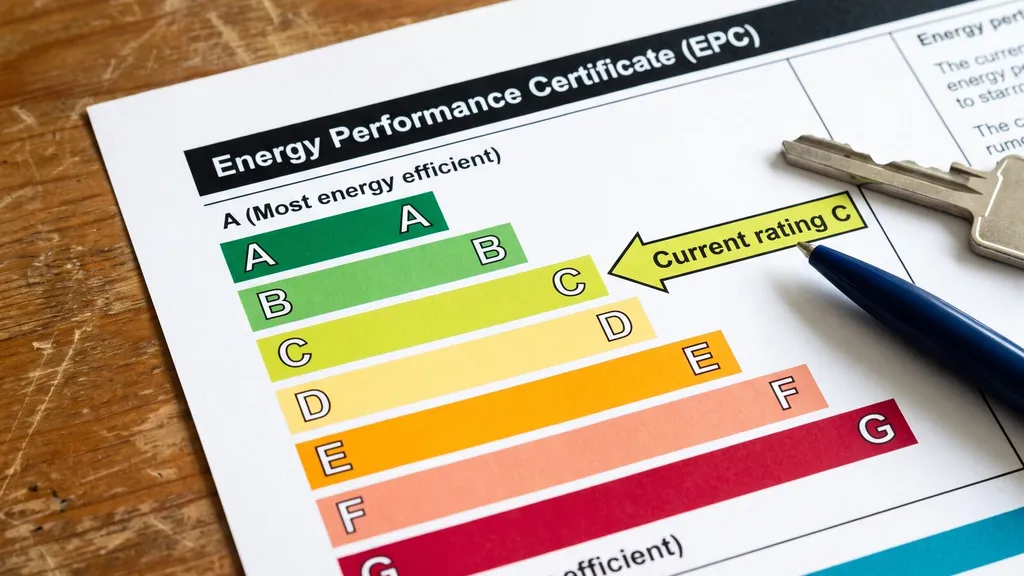
The short version: two EPC changes are coming, and they're often muddled together. First, the minimum standard is rising — private rented homes in England will need EPC C by 2030 (up from EPC E now), capped at £10,000 of spending per property. Second, the EPC document itself is being redesigned into a four-metric certificate — but that reform has been delayed from October 2026 to the second half of 2027. So despite what a lot of landlord newsletters say, no new EPC lands in 2026, and no minimum-standard deadline bites in 2026 either. This is the year to plan, not to panic.
If you own a rental in England, the EPC C deadline is the single biggest home-energy obligation on your horizon. Here's what's actually confirmed, what's been delayed, and the cheapest route to compliance — with the honest caveats the "act now or face £30,000 fines" headlines leave out.
Don't confuse the two changes
The reformed EPC (the four-metric certificate) and the MEES EPC C deadline (the minimum a rental must hit) are separate. The certificate reform slipped to H2 2027; the EPC C requirement lands in 2030. Neither is a 2026 event — but 2026 is when sensible landlords start, because the work, the installers and the grants are all easier to get now than in a 2029 stampede.
Change 1: EPC C by 2030 (the one that matters for landlords)
Since April 2020, you've needed at least an EPC E to let a home in England and Wales (with narrow exemptions). Under the Warm Homes Plan, that minimum rises to EPC C for the private rented sector, with a single deadline of 2030. The key details as they stand:
- Target: EPC C (or above) for private rented homes in England.
- Deadline: 2030 for all tenancies. An earlier 2028 date for new tenancies was proposed but dropped in favour of one deadline.
- Cost cap: £10,000 per property. Improvements made from October 2025 count towards it — keep your receipts.
- Low-value exemption: if £10,000 is 10% or more of the property's value, a lower cap applies. Exemptions must be registered on the PRS Exemptions Register.
- Landlord tax: qualifying energy-efficiency works are generally an allowable expense against rental income — check with your accountant.
The honest risk: an installer bottleneck, not the fine
There are only so many insulation crews, MCS heat-pump installers and assessors in the country — and we already track a heat pump installer shortage. If most of the private rented sector leaves compliance to 2029, prices will rise and lead times will stretch. The financial danger for landlords isn't really the penalty; it's paying peak prices in a last-minute rush. Spreading the work across 2026–2029 is the play.
Change 2: the reformed EPC — delayed to 2027
The EPC has long been criticised for leaning too heavily on running cost, which flatters cheap-to-run fuels and can mark down a genuinely well-built, all-electric home. The reform replaces the single A–G headline with four metrics, built on the new Home Energy Model:
| Today's EPC | The reformed EPC (from H2 2027) |
|---|---|
| One headline score (A–G), based mainly on running cost | Four separate metrics — no single letter dominates |
| Cost-led: rewards cheap-to-run fuels | Fabric performance (how well the building holds heat) |
| Built on the older SAP/RdSAP method | Energy cost |
| Valid 10 years | Heating system (low-carbon or not) |
| Can undervalue a well-insulated all-electric home | Smart readiness (batteries, controls, flexibility) |
The government originally aimed to launch this in October 2026, but confirmed in March 2026 that it has slipped to the second half of 2027, with a firm date to be announced. Two practical takeaways: any certificate you commission in 2026 will still be the current-style EPC, and — because the new system rewards fabric and low-carbon heating — the upgrades that get you to EPC C today (insulation, a heat pump, solar) are exactly the ones that will score well under the reformed EPC too. You're not at risk of "improving for the wrong test".
How to reach EPC C — cheapest first
The order that usually makes sense, and pays off under both the current and reformed EPC:
- Insulation and draught-proofing — loft, cavity wall, and cheap sealing. The biggest score-per-pound, and it lowers the flow temperature a heat pump needs later.
- Heating controls & lighting — a smart thermostat, TRVs and LED lighting are low-cost band-movers.
- Solar PV — lifts the cost-based score now and the smart-readiness/heating metrics later, especially paired with a battery.
- Heat pump — the strongest single move for the reformed EPC's heating metric, and grant-supported (see below).
Grants that offset the cost
You don't have to hit £10,000 out of pocket. Depending on the property and tenant circumstances, these can cover a large share:
- Boiler Upgrade Scheme — up to £7,500 (now £9,000 for off-gas oil/LPG homes) towards a heat pump. Private landlords are eligible.
- ECO4 and Warm Homes: Local Grant — insulation and heating help where tenants meet the income criteria.
- 0% VAT — no VAT on insulation, heat pumps, solar and batteries until 31 March 2027.
A new Warm Homes Agency is being set up to coordinate these schemes and speed up delivery — see our Warm Homes Plan guide for how the pieces fit together.
What about owner-occupiers?
If you live in your own home, none of the minimum-standard rules apply to you — there's no legal requirement to reach EPC C, and you only need an EPC when you come to sell. But the reformed EPC still matters at the point of sale: a clearer fabric-and-heating breakdown is likely to sharpen the effect a good (or poor) rating has on buyer interest and price. The same fabric-first upgrades that help landlords will help your home's saleability.
EPC rules — FAQs
What are the new EPC rules for landlords in 2026?
Two separate things are moving. First, the minimum standard is rising: private rented homes in England will need to reach EPC C by 2030 (up from the current EPC E), subject to a £10,000 spending cap. Second, the EPC itself is being redesigned into a four-metric certificate — but that reformed EPC has been delayed to the second half of 2027, so the certificate you get in 2026 is still the familiar A–G one. Nothing about the minimum standard has legally changed yet; 2026 is the runway, not the deadline.
What is the new EPC model for 2026?
The reformed EPC drops the single A–G score in favour of four headline metrics: energy cost, fabric performance, heating system and smart readiness. It's built on the new Home Energy Model rather than the old SAP method, and it's designed to reward "fabric-first" improvements and stop penalising well-insulated all-electric homes. Despite widespread claims of an "October 2026" launch, the government confirmed in March 2026 that it has been pushed back to the second half of 2027, with an exact date due to be confirmed.
Do I need EPC C by 2028 or 2030?
2030. An earlier proposal floated a 2028 milestone for new tenancies, but the government has settled on a single deadline of EPC C by 2030 for the whole private rented sector. Landlords should still treat it as a 2026–2029 job, because there aren't enough installers to do every property in the final year — and grant funding is most generous now.
How often do landlords need to get an EPC?
An EPC is valid for 10 years. You legally need a valid one to market a property for a new tenancy or sale, and to grant a new tenancy. You don't have to renew it mid-tenancy just because it expires, but you can't let to a new tenant without a current certificate — and once the EPC C rule bites, the rating on that certificate has to meet the standard.
Is it illegal to rent a property without an EPC?
Yes. Letting a property without a valid EPC can bring a civil penalty (commonly up to £5,000), and letting a sub-standard property below the current EPC E minimum — without a valid exemption registered on the PRS Exemptions Register — carries fines that can reach into the tens of thousands for larger properties. Owner-occupiers living in their own home don't need an EPC unless they sell.
What's the cheapest way to get a property to EPC C?
Fabric first, then heating. The cheap wins — loft insulation, cavity wall insulation, draught-proofing, low-energy lighting and a smart thermostat — often move a property a band on their own. Beyond that, solar panels and a heat pump lift both the current cost-based score and the reformed EPC's fabric and heating metrics. There's a £10,000 cost cap for landlords (improvements from October 2025 count towards it), and grants like the Boiler Upgrade Scheme, ECO4 and 0% VAT can cover a large chunk of the cost.
Sources & further reading
Editorial standards
How this guide was put together
Independent
Editorially independent UK guides — no sponsored content
Primary sources
Every guide cites gov.uk, Ofgem, MCS and manufacturer data
Current
Updated as schemes, prices and regulations change
Getting a rental to EPC C?
Insulation, solar and heat pumps all lift your rating — and grants can cover much of the cost. Get free quotes.
Get Free Quotes